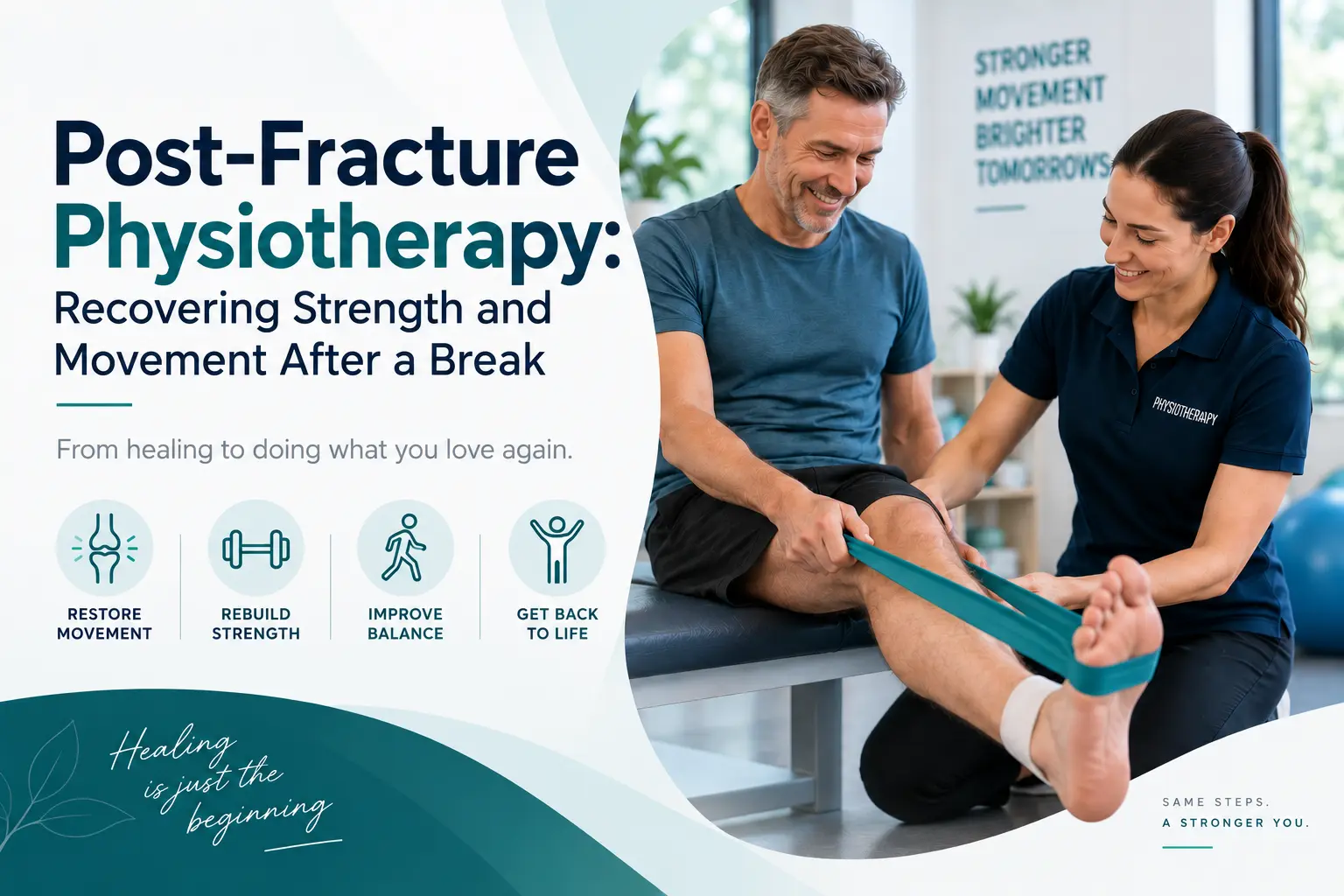
The day the cast comes off feels like the finish line. It is closer to the start of the second half. A bone can be fully healed while the limb around it is stiff, weak and swollen, because the weeks in a cast that let the bone knit also let the muscles waste and the joints seize. Post-fracture physiotherapy is the treatment that turns a healed bone back into a working limb, by rebuilding the movement, strength and confidence that immobilisation takes away.
A healed bone is not the same as a recovered limb
Most broken bones heal in around four to eight weeks, depending on your age, your general health and the type of break, while returning to full, normal activity commonly takes longer still, often a few months, and longer again for complex fractures or older adults (Better Health Channel). The gap between a healed bone and a working limb is where physiotherapy does its work, and it exists because of disuse: immobilised muscles weaken and waste, joints stiffen without movement, and the limb loses the coordination and balance it once took for granted. Waiting for these to fix themselves is slow and incomplete, which is why rehabilitation, not rest, restores function once the bone is stable.
Immobilisation leaves stiffness, weakness and swelling behind
A cast does an essential job, holding the bone still so it can heal, but the same stillness has predictable side effects that physiotherapy is designed to reverse:
- Muscle wasting. Unused muscle shrinks and weakens quickly, so the limb feels thin and unable to do what it used to.
- Joint stiffness. Joints held in one position lose range of movement as the surrounding tissues tighten.
- Swelling. Fluid pools in a limb that has not been moving and pumping, leaving it puffy and tender.
- Lost balance and coordination. The sense of where the limb is in space fades, which matters most in the leg and ankle for steady walking.
What to expect when the cast first comes off
The first look at a limb freed from a cast can be alarming. Almost all of it is normal and temporary:
- a thinner, weaker limb than the other side, from muscle loss;
- stiffness and a joint that will not move through its full range at first;
- swelling that comes and goes, often worse at the end of the day;
- dry, flaky skin and sometimes darker hair, which settles with normal washing and moisturising;
- tenderness and a wariness of moving it, which eases as confidence returns.
Physiotherapy restores movement first, then strength, then function
Recovery follows a logical order, and a physiotherapist guides you through each stage rather than skipping ahead:
| Stage | Goal | What a physiotherapist does |
|---|---|---|
| 1. Restore movement | Regain joint range and settle swelling | Gentle mobilisation, range-of-motion exercises, and swelling management |
| 2. Rebuild strength | Reload the wasted muscles safely | Progressive strengthening, matched to how the bone and tissues tolerate load |
| 3. Restore function | Return to daily tasks, work and sport | Balance and coordination work, task-specific practice, and a graded return |
For lower-limb fractures this also means retraining a normal walking pattern and, where cleared, progressing weight-bearing step by step. For athletes, the same process leads into a staged return, which our sports injury rehabilitation guide and guide to returning to sport safely set out in detail.
Skipping this rehabilitation is a false economy. A limb left to recover on its own often keeps a lasting deficit: a joint that never regains full range, a muscle that stays weak, and an altered movement pattern that quietly overloads other areas and invites re-injury or ongoing pain. Guided rehabilitation closes those gaps while the tissue is still adapting, which is why the first weeks and months after the cast comes off matter most, and why lost ground is harder to reclaim later. Starting sooner, and progressing steadily, is the reliable route back to full function.
When to start, and how long recovery takes
Physiotherapy often begins before the cast is even off, by keeping the joints above and below the injury moving and the rest of the body strong. Focused rehabilitation of the injured area usually starts once your doctor confirms the bone is stable, commonly when the cast is removed. From there, most people regain good movement and strength over the following weeks and months, with the exact timeline shaped by which bone broke, your age and your general health. Recovery is a gradual process rather than a single event (healthdirect), and steady, guided progress beats rushing, which risks flare-ups and setbacks.
| When recovery needs urgent review Contact your doctor or seek urgent care if, during recovery, you notice worsening rather than improving pain, new numbness, tingling or a cold or discoloured hand or foot, a limb that looks an unusual shape or colour, or calf pain, swelling and warmth that could signal a clot. Fractures into a joint can also lead to osteoarthritis later, so ongoing joint pain is worth reviewing. These are uncommon, but early attention matters (healthdirect: Fractures). |
Older adults: rebuilding strength and preventing the next fracture
In older people a fracture is rarely just a local injury. It often follows a fall and weaker bones, and the weeks of reduced activity can cost strength and confidence that are hard to win back. Post-fracture physiotherapy for seniors therefore looks beyond the healed bone to the whole picture: rebuilding strength and balance, restoring confident walking, and reducing the risk of another fall. Building balance and muscle strength, along with bone-friendly nutrition, is one of the main ways to prevent future fractures. Our guides to physiotherapy for seniors and falls prevention carry this further. Treating the fracture and the fall risk together is what protects an older person’s independence, rather than leaving them to recover the bone but lose the confidence to move.
Recover from your fracture with Befit Physio
Whether you have just had a cast fitted or have just had it removed, our physiotherapists build a recovery plan around your specific break and your goals. That care is part of our fracture and casting service, and for a broken wrist, arm or elbow our hand, arm and elbow physiotherapy, or for the foot and ankle our foot and ankle physiotherapy, target the region directly.
- Book an assessment at our Carlingford clinic or our North Kellyville clinic, in the clinic or at home.
| Cast just off, and the limb feels stiff and weak? Call Carlingford on 02 9872 2005 or North Kellyville on 02 9624 2047, or book online. We will assess the joint, ease the swelling and rebuild your strength. |
Frequently Asked Questions
How long after a fracture can I start physiotherapy?
Often sooner than people expect. While the bone is healing, a physiotherapist can keep the nearby joints moving and the rest of the body strong, which limits how much you lose. Focused rehabilitation of the injured area usually begins once your doctor confirms the bone is stable, commonly around the time the cast comes off. Your treating team’s clearance sets the timing.
What should I expect after my cast is removed?
A stiff, weak and often swollen limb that looks thinner than the other side, plus dry, flaky skin. This is the normal result of weeks of immobilisation, not a sign that something is wrong. Movement returns first, then strength, then confidence, and physiotherapy speeds each stage while keeping the healing tissue safe.
How long does it take to recover after a fracture?
The bone itself knits first, over a matter of weeks, while returning to full, normal activity usually takes several months, and longer for complex fractures or in older adults. The timeline depends on which bone broke, your age and your general health. Consistent rehabilitation is what shortens the gap between a healed bone and a fully working limb.
Is stiffness and swelling normal after a cast?
Yes. Stiffness comes from joints held still, and swelling from a limb that has not been moving to pump fluid away. Both are expected and improve with gentle movement, elevation and the exercises your physiotherapist prescribes. What is not expected is worsening pain, numbness or a cold, discoloured limb, which should be checked promptly.
My bone healed fine, so do I really need physiotherapy?
A bone healing well and a limb working well are two different things. Even a perfectly healed fracture can leave lasting stiffness, weakness and altered movement if the surrounding muscles and joints are not rehabilitated. Physiotherapy restores that function, which is what lets you return fully to work, sport and daily life rather than settling for a limb that never quite came back.
About the author and clinical review
| Author: Anshu Sudan, Principal Physiotherapist, Befit Physiotherapy & Sports Injury Centre. Clinically reviewed by: a physiotherapist at Befit Physio. Carlingford: Shop 2/1 Post Office St, Carlingford NSW 2118. North Kellyville: 15/21 Hezlett Rd, North Kellyville NSW 2155. |
| Medical disclaimer This article is general information, not personal medical advice, and reflects Australian guidance current as at July 2026. Every fracture is different. Follow your treating doctor’s advice on healing and weight-bearing, and start rehabilitation only once your bone is cleared as stable. See a physiotherapist or doctor for a plan suited to you, and seek prompt care for the warning signs above. |