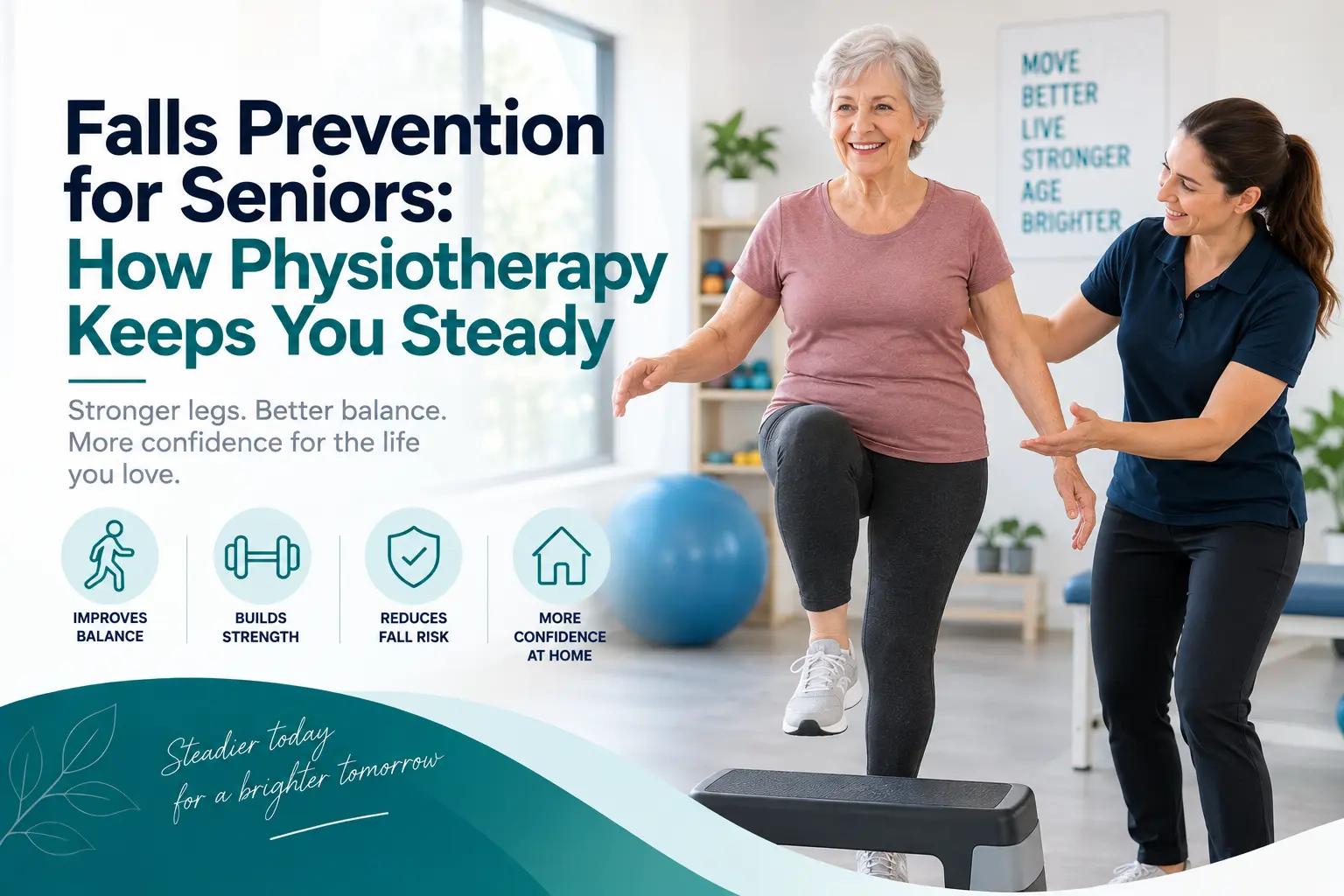
A fall can change an older person’s life in a second, yet the belief that falling is just part of getting older quietly does its own damage, because it stops people acting on something they can change. The facts are sobering but hopeful in equal measure.
One in three Australians over 65 has at least one fall a year, about half of them at home (Falls Prevention Alliance Australia), and falls are the leading cause of injury hospitalisation in Australia, with older adults hospitalised for them far more than any other age group (AIHW).
The hopeful part: falls are largely preventable, and physiotherapy is one of the most effective ways to prevent them.
| Targeted balance and functional exercise is the single most effective intervention for preventing falls. Professor Kim Delbaere, Neuroscience Research Australia, in the Australian Physiotherapy Association’s InMotion |
Falls are common and serious, but not an inevitable part of ageing
Two things make falls worth taking seriously. They are common, rising sharply from around age 65 as balance and strength decline, and they are serious, because ageing bones break more easily. Fractures are the most common injury from a fall, and a broken hip in particular can be life-changing for someone who does not have the reserves to bounce back.
If a fracture has already happened, our guides to recovering after a fracture and physiotherapy after hip replacement cover the road back.
This article is about the step before that: stopping the fall in the first place. Prevention is the whole point, and it works.
Falls come from three things: the person, their behaviour and their environment
Falls are rarely bad luck. As falls researchers describe it, risk is the interaction of the person, their behaviour and their environment, and most of it can be changed.
| Where the risk sits | Common examples | What helps |
|---|---|---|
| The person | Weak legs, poor balance, failing vision, slow reactions, some medications and health conditions | Strength and balance training, plus a medication and vision review |
| Behaviour | Rushing, walking unsteadily, poor footwear, not looking ahead | Slowing down, supportive shoes, and confidence built through practice |
| The environment | Loose rugs, cords, poor lighting, slippery or cluttered floors, no bathroom rails | A home-hazard check and simple, low-cost changes |
The fear-of-falling trap: doing less quietly raises the risk of a fall
One risk factor deserves special attention because it hides in plain sight: the fear of falling itself. After a fall or a near-miss, it is natural to move less and more cautiously. But research shows that high levels of worry about falling are linked to activity restriction and physical decline, and doing less weakens the very muscles and balance that keep you upright. Fear can also change how you walk, with shorter, more variable steps that are actually less steady.
In other words, avoiding activity to feel safer often makes a fall more likely, which is exactly the cycle that guided exercise breaks.
Balance and strength training cuts the rate of falls by almost a quarter
The evidence here is unusually clear. Exercise, and specifically balance and functional training, reduces the rate of falls by almost 25% in people aged 60 and over living in the community (Australian Physiotherapy Association). The key is the type and the dose. It has to genuinely challenge your balance, it has to include strengthening for the legs, and it has to be ongoing, because the benefit fades if you stop.
A realistic target is around a couple of hours of this kind of exercise each week, built into your routine rather than done in occasional bursts. General walking is good for you, but on its own it does not challenge balance enough to prevent falls, which is the piece most people miss.
What a falls-prevention physiotherapist screens for, then prescribes
Assessing falls risk is quick, and physiotherapists are experts in balance and gait. A good starting point is three simple questions drawn from the world falls guidelines: have you fallen in the past year, do you feel unsteady when standing or walking, and do you worry about falling? A yes to any of them is worth a closer look.
From there, a physiotherapist assesses your walking and balance with straightforward tests, reviews your medications and health, and then prescribes a program matched to your risk. That plan does the things that actually prevent falls:
- Progressive balance and leg-strength training pitched to challenge you safely and stepped up as you improve.
- Practising getting up from the floor, so that if you do go down, you are not stuck there.
- Advice on walking aids and footwear, and a review of your home for hazards.
- Referral where needed for a vision check or a medication review, since both change falls risk.
Small changes that remove the trip hazards where most falls happen: at home
Because around half of older people’s falls happen at home, a quick sweep of your rooms is one of the easiest wins:
- Clear the floor. Remove or secure loose rugs, tape down cords, and keep walkways free of clutter.
- Light the way. Improve lighting, and add night lights on the path to the bathroom.
- Make the bathroom safer. Fit grab rails and non-slip mats where you shower and near the toilet.
- Mind your feet. Wear firm, supportive, well-fitting shoes rather than loose slippers or socks.
- Rise slowly. Pause when you stand up, as a drop in blood pressure can leave you light-headed.
Befit Physio helps older adults stay steady in North Kellyville and Carlingford
If you or a parent have had a fall, a near-miss, or simply feel less steady than you used to, a physiotherapist can assess the risk and build a program to reduce it. That is a core part of our aged care and home physiotherapy, and it sits alongside the broader work in our physiotherapy for seniors guide.
We see clients at our North Kellyville clinic for the Hills and our Carlingford clinic for the surrounding suburbs, and we visit at home when getting in is difficult.
- Book an assessment at our North Kellyville clinic or our Carlingford clinic, in the clinic or at home.
| Worried about falls, for yourself or a parent? Call North Kellyville on 02 9624 2047 or Carlingford on 02 9872 2005, or book online. We will check the risk and build a plan to keep you steady. |
Frequently asked questions
What should I do if my elderly parent keeps falling?
Treat repeated falls as a signal, not a phase. Book a falls assessment with a physiotherapist or GP, because recurrent falls usually have identifiable, treatable causes such as weakness, poor balance, medication effects or home hazards. In the meantime, remove obvious trip hazards at home and make sure any prescribed walking aid is actually being used. Two or more falls in a year puts someone in a higher-risk group that benefits most from a tailored program.
What are the best balance exercises for seniors?
The exercises that work are the ones that safely challenge your balance, such as standing with feet closer together or on one leg near a bench, heel-to-toe walking, and sit-to-stand repetitions, combined with leg strengthening. The right level is individual, which is why a physiotherapist tailors and progresses them; too easy does little, and too hard is unsafe. Consistency matters more than intensity, so aim for regular practice.
How can an older person get up off the floor safely after a fall?
Having a planned method matters, because being stuck on the floor is itself dangerous. In general, roll onto your side, push up to hands and knees, crawl to a sturdy chair, place your hands on it and bring one foot forward, then push up to sit. A physiotherapist can teach and rehearse a method suited to your strength and any conditions, so it is there if you ever need it.
Are falls just a normal part of getting older?
No. Falls become more common with age, but they are not inevitable and they are largely preventable. Much of the risk comes from things you can change, especially declining balance and strength, which respond well to training. Believing falls are simply part of ageing is one of the reasons people do not act, when acting early is exactly what protects their independence.
When should an older adult see a physiotherapist about falls?
Sooner than most people think. It is worth booking if you have fallen in the past year, feel unsteady on your feet, or worry about falling, and you do not need to wait for an injury. Balance starts declining well before 65, so a check and a program can be preventive rather than reactive, keeping you steady and confident for longer.
About the author and clinical review
| Author: Anshu Sudan, Principal Physiotherapist, Befit Physiotherapy & Sports Injury Centre. Clinically reviewed by: a physiotherapist at Befit Physio. Carlingford: Shop 2/1 Post Office St, Carlingford NSW 2118. North Kellyville: 15/21 Hezlett Rd, North Kellyville NSW 2155. |
| Medical disclaimer This article is general information, not personal medical advice, and reflects Australian guidance current as at September 2026. Everyone’s health and falls risk are different. Before starting a new exercise program, see a physiotherapist or doctor for an individual assessment, especially if you have had a fall, feel unsteady, or have heart, blood-pressure or other medical conditions. Seek prompt medical care after any fall with a head injury, severe pain, or an inability to get up or bear weight. |