For a lot of people, a diagnosis of knee osteoarthritis lands like a verdict: the joint is wearing out, activity will only make it worse, and a replacement is just a matter of time. Almost none of that is true. Knee osteoarthritis is a common and highly manageable condition, and the single most effective first treatment is not rest and not surgery. It is movement.
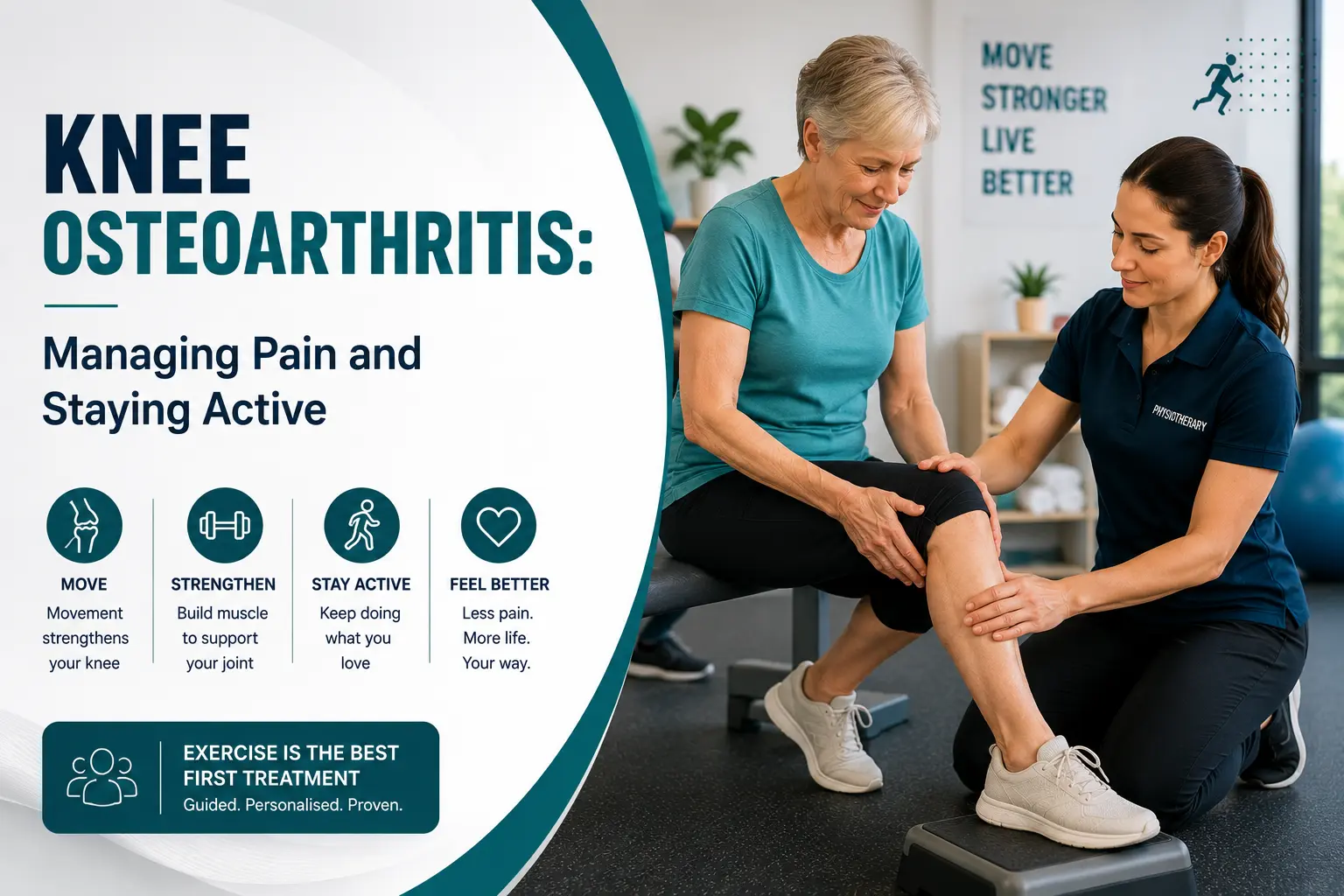
That is not wishful thinking; it is what the evidence and Australia’s own clinical guidance say. The right exercise, guided well, reduces pain, improves function and helps you keep doing what you value, often delaying or avoiding surgery altogether. This guide explains why, and how to stay active with confidence rather than fear.
What knee osteoarthritis actually is
Osteoarthritis is often described as simple wear and tear, but that undersells it. It is a whole-joint condition involving the cartilage, the bone beneath it, the joint lining and the muscles around it, which is exactly why strengthening those muscles helps. The main symptoms are knee pain, stiffness and sometimes swelling. It becomes more common with age, rising noticeably from around 45, and affects more women than men.
Knee pain has many other causes too, which our guide to the common causes of knee pain covers; this article is about osteoarthritis specifically.
| A diagnosis can be made without imaging or further investigations. Osteoarthritis of the Knee Clinical Care Standard (2024) |
It also helps to know that osteoarthritis does not follow one steady downhill path. Symptoms fluctuate, with better weeks and worse ones, and many people stay stable or even improve for years when the joint is looked after.
A painful flare is not proof that the knee is crumbling; more often it reflects a change in load or activity that can be managed. Framing it this way matters, because fear of movement is one of the things that makes osteoarthritis worse, not better.
| Three myths worth letting go of “Using my knee will wear it out faster.” The opposite is closer to the truth. Appropriate exercise does not damage an osteoarthritic joint; it strengthens its supports and tends to reduce pain over time. “I need a scan to know what is going on.” Usually not. Knee osteoarthritis is diagnosed from your history and a physical examination, and scan findings often do not match how a knee actually feels or functions. “Surgery is inevitable.” For most people it is not the first step, and often not needed at all. Joint replacement is reserved for severe cases that have not responded to good non-surgical care. Myths checked against the Osteoarthritis of the Knee Clinical Care Standard, Australian Commission on Safety and Quality in Health Care. |
Why movement is the best first treatment
Australian and international guidelines agree on the foundation of knee osteoarthritis care, and it is strikingly consistent: education, exercise and, where relevant, weight management come first, before injections or surgery are considered. Exercise works on several levels at once.
Stronger thigh and hip muscles share the load the joint would otherwise carry alone, movement keeps the joint nourished and mobile, and regular activity gradually turns down the nervous system’s pain sensitivity. The result is a knee that hurts less and does more, without anything being cut or replaced.
This is why passive fixes tend to disappoint. Rest, painkillers or a brace might quiet a knee briefly, but they do nothing to build the strength and capacity that keep it comfortable, so the relief rarely lasts. Injections have a limited, case-by-case role, but they are an addition to an active plan, not a replacement for it. The active ingredient in osteoarthritis care is, quite literally, activity.
GLA:D: an exercise program built for osteoarthritis
One of the most useful developments in osteoarthritis care is a structured program called GLA:D, short for Good Life with osteoArthritis: Denmark, now delivered widely across Australia. It pairs two education sessions with twelve supervised group-exercise sessions over about six weeks, teaching you how to move well and manage your knee for the long term rather than just chasing short-term relief.
The results reported by GLA:D Australia are the kind of thing that makes people rethink surgery: participants report an average pain reduction of around a third, take less pain medication, feel less need for an operation, and are more physically active a year on. It is a clear demonstration that the right exercise, done consistently, changes how a knee feels and functions.
What a physiotherapy program looks like
Good care for knee osteoarthritis is individual, not a handout of generic exercises. It usually begins with an assessment of the whole leg, not just the knee, because hip and ankle strength and the way you walk all affect how the joint is loaded, plus a conversation about how symptoms affect your daily life and what you want to get back to.
From there, a physiotherapist builds a progressive strengthening and movement program pitched to your current level and steps it up as you improve. Alongside the exercise, expect hands-on techniques and clear education to help you settle pain and handle flares, practical advice on activity, footwear and any useful aids, and regular reviews so the plan keeps pace with you.
The aim is not a quick fix but the skills and strength to manage the knee yourself for the long run.
Staying active day to day
Between guided sessions, the small daily choices add up. A practical approach looks like this:
- Keep moving within comfort. Some ache during and after activity is acceptable and settles; sharp or worsening pain is a sign to adjust, not to stop altogether.
- Build strength. Work the thigh, hip and buttock muscles a couple of times a week, since these are the knee’s main shock absorbers.
- Choose knee-friendly cardio. Walking, cycling, swimming and water exercise keep you fit while being kind to the joint.
- Manage load and flares. Pace activity across the day, and ease back briefly during a flare rather than pushing through or giving up.
- Mind your weight. Because the knee carries several times your body weight with each step, even modest weight loss meaningfully reduces the load and the pain it causes.
General self-management guidance: healthdirect, Osteoarthritis. The same principles apply across the body.
When is surgery actually considered?
Surgery has a place, but it sits at the end of the pathway, not the start. A knee replacement is generally considered only when osteoarthritis causes severe pain and functional loss that good non-surgical care has not eased.
Approaching it this way is not giving up on the option; it means that if you do eventually need surgery, you go in stronger and recover better. If a replacement is on your horizon, our guide to physiotherapy after total knee replacement walks through what to expect.
Older adults managing several joints may also find our physiotherapy for seniors guide useful.
Manage your knee osteoarthritis at Befit Physio
A physiotherapist can assess your knee, rule out other causes and build an exercise program pitched to your level and your goals, adjusting it as you progress. That tailored, hands-on approach is what our knee pain treatment is built around, so you can stay active with less pain and more confidence.
- Book an assessment at our Carlingford clinic or our North Kellyville clinic, in the clinic or at home.
- Bring your goals. Tell us what you want to keep doing, from bushwalks to gardening and we will aim the program at it.
| Sore knees slowing you down? Call Carlingford on 02 9872 2005 or North Kellyville on 02 9624 2047, or book online. We will assess your knee and build a plan to keep you moving. |
Frequently asked questions
Does physiotherapy really help knee osteoarthritis?
Yes, and strongly. Guided exercise and education are recommended as first-line treatment because they reliably reduce pain and improve function. Structured programs designed for osteoarthritis report substantial pain reduction and less need for medication or surgery. Physiotherapy targets the muscles and movement patterns that protect the joint, which is why it works when done consistently.
Will exercise wear my knee out or make it worse?
No. Appropriate, well-progressed exercise does not damage an osteoarthritic joint; it strengthens the muscles that support it and tends to reduce pain over time. Some mild ache during and after activity is normal and settles. The trick is matching the type and amount of exercise to your knee, which is exactly what a physiotherapist helps you do.
Do I need an X-ray or MRI to diagnose knee osteoarthritis?
Usually not. Knee osteoarthritis is diagnosed mainly from your symptoms and a physical examination, and imaging is not routinely required to start effective treatment. Scan findings often do not line up with how a knee feels or works, so a normal or ‘bad-looking’ scan does not decide your management. Imaging is used only when something unusual needs clarifying.
What are the best exercises for knee osteoarthritis?
A combination works best: strengthening for the thigh, hip and buttock muscles, plus knee-friendly aerobic activity such as walking, cycling or swimming, and balance work. There is no single ‘best’ exercise, because the right program depends on your knee, your fitness and your goals. A physiotherapist tailors and progresses it so it challenges you safely.
Will I definitely need a knee replacement?
Not necessarily, and rarely as a first step. Most people manage well for years with exercise, weight management and education, and many avoid surgery altogether. A joint replacement is considered only for severe osteoarthritis that has not responded to good non-surgical care, and even then, being strong beforehand improves the recovery.
About the author and clinical review
| Author: Anshu Sudan, Principal Physiotherapist, Befit Physiotherapy & Sports Injury Centre. Clinically reviewed by: a Befit physiotherapist. Carlingford: Shop 2/1 Post Office St, Carlingford NSW 2118. North Kellyville: 15/21 Hezlett Rd, North Kellyville NSW 2155. |
| Medical disclaimer This article is general information, not personal medical advice, and reflects Australian guidance current as at July 2026. Knee osteoarthritis varies from person to person. Before starting or changing an exercise program, or if your knee locks, gives way, swells markedly or is severely painful, see a physiotherapist or doctor for an individual assessment. |