A total knee replacement is one of the most successful operations in modern medicine and about four in five people are satisfied with the result. But the surgery is only half the job. What you do afterward and even before, decides how well the new knee moves, how strong it becomes and how quickly you get your life back. Physiotherapy is the part of the journey that turns a successful operation into a knee you can trust (healthdirect).
Two honest expectations set the scene. First, recovery is measured in months, not weeks: most people are walking well by six to twelve weeks, with full recovery taking up to a year.
Second, your effort matters more than almost anything else, because range of motion and strength are built through consistent rehabilitation, not by rest.
Your recovery starts before surgery
One of the most useful and least known facts about knee replacement is that recovery begins before you go into theatre. Prehabilitation, building strength and fitness in the weeks leading up to surgery, is linked to better outcomes, a shorter hospital stay and improved quality of life afterward (prehabilitation research).
Stronger quadriceps going in mean less to rebuild coming out, and better fitness helps you tolerate the demands of rehab. If surgery is on your horizon, the weeks beforehand are not downtime; they are training.
Many people reach knee replacement after years of osteoarthritis. If you are still weighing it up, exercise-based care can reduce pain and delay or sometimes avoid surgery, as our guide to how physiotherapy helps knee osteoarthritis explains and the Osteoarthritis of the Knee Clinical Care Standard recommends trying it first.
Your recovery timeline, stage by stage
Recovery follows a fairly predictable path. Knowing the stages, and the milestones that mark each one, makes the journey far less daunting. Timelines vary between people and surgeons, so treat it as a map, not a deadline, and follow your surgical team’s protocol.
| Stage | Focus | Typical milestones |
|---|---|---|
| Before surgery (prehab) | Build strength and fitness and prepare | Stronger quads, a clear plan, less anxiety |
| Hospital (days 0 to 3) | Get moving safely and manage pain | Stand and walk with aids, start gentle bending |
| Weeks 0 to 6 | Wound healing, less swelling, restore movement | Walk with aids, straighten the knee fully, bend toward 90 degrees |
| Weeks 6 to 12 | Walk unaided and rebuild strength | Walk without aids, bend past 90 degrees, often back to driving |
| 3 to 12 months | Return to full activity | Normal walking and a return to valued activities |
Befit Physio Knee Replacement Recovery Timeline v1.0 · 11 July 2026. Individual timelines vary; follow your surgical team. Sources: healthdirect; rehabilitation research.
The milestones that matter most
A few specific goals do the heavy lifting in a knee-replacement recovery. Keep these front of mind:
- Straighten the knee fully, early. Getting the knee to straighten completely (full extension) is a priority, because it is much harder to regain later and it is essential for a normal walking pattern.
- Regain bend steadily. Aim to bend past 90 degrees by around six weeks and keep working toward roughly 120 degrees, which covers stairs, sitting and most daily tasks.
- Rebuild the quadriceps. Thigh strength drives your ability to walk, climb stairs and stand from a chair, so strengthening is central at every stage.
- Return to driving when cleared. Many people resume driving around four to six weeks, but confirm timing with your surgeon, especially for a right-knee replacement.
Return to activity is realistic. An Australian study reported a high rate of return to low-impact pursuits such as walking, swimming and bushwalking after a knee replacement, so having activities to work toward is well founded.
What physiotherapy does at each stage
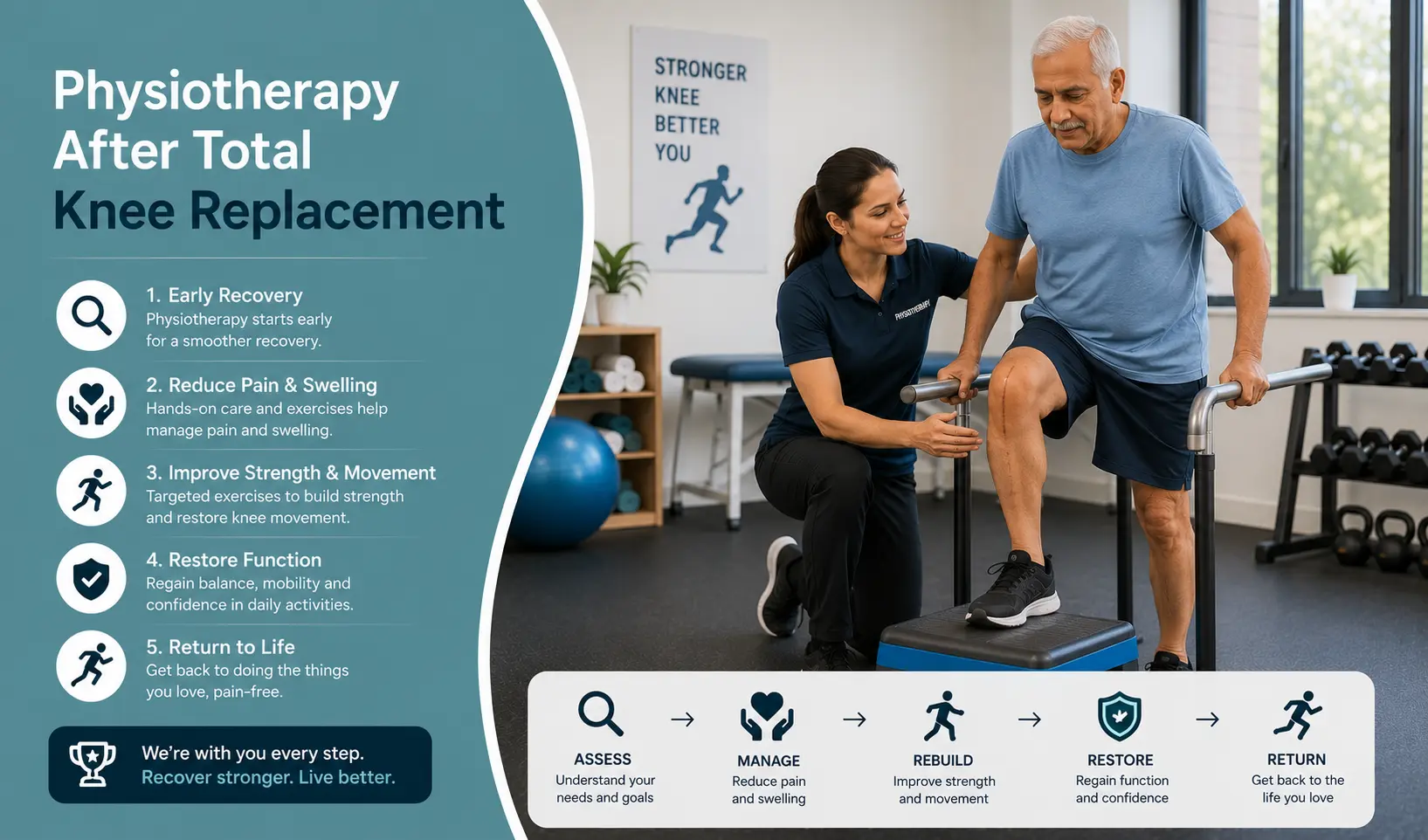
In the early days, physiotherapy was about safe movement: standing, walking with aids, reducing swelling and starting gentle range-of-motion work. As healing progresses, the focus shifts to restoring full movement and rebuilding strength through progressive exercise, balance work and stairs, and retraining a smooth walking pattern. Later still, it is about returning to the activities you value. This staged, criteria-based approach mirrors how all good rehabilitation works, which we describe in our guide to how rehabilitation is staged and progressed. You can also read how our physiotherapy for knee recovery is structured.
| After surgery: signs to act on Contact your surgeon or seek urgent care if you notice signs of a blood clot or infection. A blood clot (DVT) may cause new calf pain, swelling, warmth or redness, and if a clot travels to the lungs it can cause sudden breathlessness or chest pain, which is an emergency, so call 000. Signs of infection include a fever, increasing redness, warmth or discharge around the wound, or pain that is getting worse rather than better. A fall onto the new knee also warrants a prompt check. |
How to get the most from your new knee
- Do your exercises daily. Little and often beats occasional long sessions, and consistency is what builds movement and strength.
- Manage swelling. Elevation, gentle movement and icing where advised help you move more comfortably.
- Keep moving, and pace it. Balance activity with rest, and build up gradually rather than overdoing a good day.
- Keep your appointments. Regular physiotherapy check-ins keep your program progressing at the right rate.
For the wider picture of knee problems and how they are assessed, see our guide to what causes knee pain, which sits alongside this one in our knee resources.
Rehab your new knee at Befit
- Start early, even before surgery. We can guide prehabilitation and pick up your rehab as soon as your surgeon clears it.
- Book with us at our Carlingford practice or with our physiotherapists in North Kellyville, online or by phone.
| Preparing for, or recovering from, a knee replacement? Book a one-on-one assessment online, or call Carlingford on 02 9872 2005 or North Kellyville on 02 9624 2047. We will build a program around your stage of recovery and your goals. |
Frequently asked questions
How long does recovery take after a total knee replacement?
Most people walk well by six to twelve weeks, but full recovery, including strength and a return to valued activities, can take up to a year. Progress is gradual and depends heavily on doing your rehabilitation. Early milestones like straightening the knee fully and regaining bend matter most in the first weeks.
Is physiotherapy necessary after a knee replacement?
Yes. The operation replaces the joint, but movement, strength and a normal walking pattern are rebuilt through rehabilitation. Without it, people commonly end up with a stiff, weak knee. Physiotherapy guides range-of-motion and strengthening at the right pace and helps you avoid setbacks.
Can I prepare before surgery to recover faster?
Yes, and it is worth doing. Prehabilitation, building strength and fitness in the weeks before surgery, is linked to better outcomes, a shorter hospital stay and improved quality of life. Stronger muscles going in mean less to rebuild afterward, so the lead-up to surgery is valuable training time.
When can I return to activities and sport?
Walking, swimming, cycling and similar low-impact activities are usually encouraged as you recover, while high-impact sport is generally discouraged to protect the joint. Your physiotherapist and surgeon will guide what suits your knee, and most people return to the low-impact pursuits they value.
About the author and clinical review
| Author: Anshu Sudan, Principal Physiotherapist, Befit Physiotherapy & Sports Injury Centre. Clinically reviewed by: a Befit physiotherapist. Carlingford: Shop 2/1 Post Office St, Carlingford NSW 2118. North Kellyville: 15/21 Hezlett Rd, North Kellyville NSW 2155. |
| Medical disclaimer This article is general information, not personal medical advice, and reflects the position as at July 2026. Recovery after a total knee replacement varies between people and surgeons, so always follow your surgical team’s specific protocol. If you notice signs of a blood clot or infection, seek urgent care. |