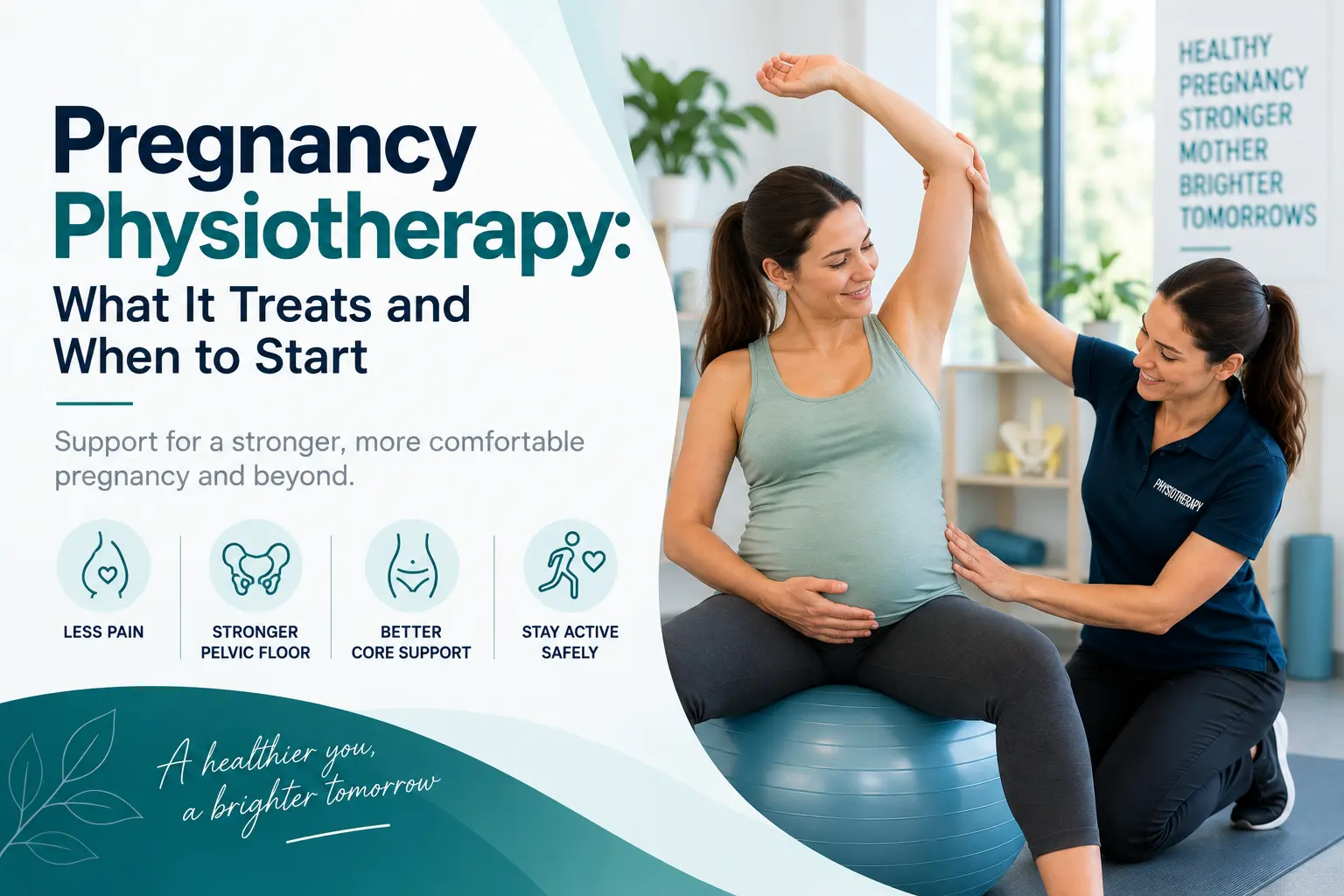
Pregnancy physiotherapy is specialised care that treats the muscle, joint and pelvic-floor problems pregnancy brings on, and keeps you moving and exercising safely. A women’s health physiotherapist assesses those changes, eases the pain they cause, and guides you from the first trimester through to recovery. The need is common, not rare: pregnancy-related pelvic girdle pain affects 44% of Australian women (Ceprnja et al., 2021), so the aches many women dismiss as unavoidable are usually treatable.
At Befit Physio, our women’s health physiotherapists treat pregnancy at our North Kellyville and Carlingford clinics, and no doctor’s referral is required to start. This guide answers the three questions people search most, what it treats, when to begin and whether it is safe, and links to deeper reading on each concern.
Pregnancy and the pelvic floor, by the numbers
Sources: pelvic girdle pain, Ceprnja et al. (2021); incontinence, RANZCOG; abdominal separation, Pregnancy, Birth and Baby. |
Pregnancy physiotherapy treats pain, pelvic floor and core, from first trimester to postpartum
Most pregnancy concerns cluster into a few areas. Each has a distinct cause, and each has its own treatment. This table names them and points to where the site covers them in depth.
| Concern | What is happening | Where we go deeper |
|---|---|---|
| Pelvic girdle and pubic symphysis pain | Softened ligaments and shifting load strain the pelvic joints | Pregnancy back & pelvic pain |
| Lower back pain and sciatica | A deepening lumbar curve stresses the spine and nearby nerves | Back pain in pregnancy |
| Bladder leaking and pelvic floor weakness | The pelvic floor stretches under the baby’s growing weight | Pelvic floor physiotherapy |
| Abdominal separation and core loss | The rectus abdominis muscles part along the midline | Postnatal core recovery |
| Losing fitness or exercising unsafely | Balance, load and joint tolerance shift each trimester | Safe exercise in pregnancy |
Two conditions catch women off guard. Carpal tunnel syndrome appears when fluid retention compresses the median nerve at the wrist, causing tingling, numbness or a weak grip; splinting, activity changes and nerve exercises settle it. Neck pain and headaches then arrive after birth, driven by hours of feeding in a bent posture, and posture retraining resolves most of them.
Relaxin softens your ligaments while your centre of gravity shifts forward
Three mechanisms explain almost every pregnancy complaint, and reading them is how a physiotherapist treats the cause rather than the symptom:
- Hormones. Relaxin, with oestrogen and progesterone, loosens the pelvic ligaments so the pelvis can open for birth; that same looseness reduces joint stability across the body.
- Load and posture. As the uterus grows, your centre of gravity shifts forward and your lower back curves more to compensate, while the ribs and diaphragm move, changing how your breath and core work together.
- Pelvic floor pressure. The pelvic floor, a muscular sling under the bladder, bowel and uterus, carries steadily more weight as your baby grows.
Pelvic girdle pain is pregnancy’s most common musculoskeletal condition, and early care limits it
Pelvic girdle pain sits at the front, sides or back of the pelvis and often bites when you climb stairs, roll over in bed or stand on one leg. It is the most common musculoskeletal condition of pregnancy, and it is not something to endure quietly, since the pain can persist after birth when it is left unmanaged. Physiotherapy addresses it with tailored strengthening, movement modification, and support such as a pelvic belt, and the earlier that starts, the less ground the pain gains. Our guide to pregnancy back and pelvic pain sets out the relief that works.
Starting early prevents more than it fixes, and the pelvic floor proves it
The timing question has a clear, evidence-based answer. You can begin at any stage and should not wait for pain, because early physiotherapy is largely preventive. The strongest proof is the pelvic floor: structured pelvic floor muscle training in early pregnancy brings about a 62% reduction in urinary incontinence in late pregnancy, and a 29% reduction three to six months after birth (RANZCOG). Put plainly, learning to engage and relax the pelvic floor before problems appear changes your odds, and because no referral is needed, nothing stands between you and that first appointment.
It is worth booking a pregnancy physiotherapy appointment if you:
- have back, pelvic or pubic pain that limits walking, stairs, sleep or daily tasks;
- leak urine when you cough, sneeze, laugh or exercise;
- want to keep exercising, or start safely, during pregnancy;
- are unsure how to engage your pelvic floor for labour and recovery;
- simply want a preventive check on your posture, core and pelvic floor.
An AHPRA-registered physiotherapist assesses your whole body, then builds one plan
Every physiotherapist in Australia must register with AHPRA, the national regulator, and with a registered practitioner physiotherapy during pregnancy carries no general risk; occasionally there is brief muscle soreness after hands-on work, which your physio will flag in advance. A first visit is a whole-body assessment: your physiotherapist watches your posture, breathing, core and pelvic floor and how they coordinate, then builds a single plan. Treatment blends gentle manual therapy, guided movement, a short home program and practical advice, sometimes including a support belt, matched to your trimester. Progress is cumulative, so most of the benefit comes from the exercises you repeat between visits.
After birth, physiotherapy rebuilds your core and pelvic floor for a safe return to sport
Care does not stop at delivery, because birth stretches the abdominal wall and pelvic floor. Most women finish pregnancy with some abdominal separation, and rebuilding that core, easing any bladder or bowel changes, and returning to running or the gym without injury is its own process. Rushing it invites setbacks; guiding it protects the result. Our guides to recovering your core after birth and pelvic floor rehab map that path. Because pregnancy and postpartum form one continuous story, seeing the same physiotherapist across both keeps nothing lost in translation.
Befit Physio treats pregnancy at its North Kellyville and Carlingford clinics
Care is easiest to keep up when it is close, especially late in pregnancy or with a newborn. Befit Physio’s women’s health physiotherapy runs from two clinics: our North Kellyville rooms serve the Hills, from Kellyville and Rouse Hill to Beaumont Hills and Box Hill, and our Carlingford clinic covers the surrounding suburbs. Appointments are one-on-one, home visits are available, and no referral is needed to begin.
- Book an assessment at our North Kellyville clinic or our Carlingford clinic, in the clinic or at home.
- Tell us your stage. Planning, pregnant or postpartum, the plan is built around where you are.
| Feeling pregnancy in your back, pelvis or pelvic floor? Call North Kellyville on 02 9624 2047 or Carlingford on 02 9872 2005, or book online. We will assess you and build a safe, stage-appropriate plan. |
Frequently Asked Questions
What does a pregnancy physiotherapist do?
A pregnancy, or women’s health, physiotherapist assesses and treats the muscle, joint and pelvic-floor changes of pregnancy, and coaches safe movement and exercise. In practice that means easing pelvic and back pain, training the pelvic floor, adapting your exercise, and preparing your body for birth and recovery. The goal is function and comfort throughout, not simply pain relief once something hurts.
Do I need a referral, and is physiotherapy safe during pregnancy?
You do not need a GP referral for a standard appointment; you can book directly. With a qualified, AHPRA-registered physiotherapist, physiotherapy during pregnancy is considered safe, with technique adapted to your stage. The main side effect is occasional short-lived muscle soreness after hands-on treatment, which your physiotherapist will explain beforehand.
At what point in pregnancy should I start seeing a physio?
There is no single right week; you can start at any stage and should not wait for pain. Early visits lean toward prevention, since pelvic floor training in early pregnancy measurably lowers the risk of leaking later. Later visits usually target specific problems such as pelvic girdle pain. If discomfort limits you, or you want to keep exercising safely, that is your cue to book.
Is it worth seeing a women’s health physio before birth?
For many women it is. An antenatal check confirms your pelvic floor is working, teaches you to engage and relax it for labour, and treats posture or pain before it worsens. It also lets you plan postnatal recovery in advance, so you know what to do in the first weeks rather than working it out while sleep-deprived.
Will Medicare or private health cover pregnancy physiotherapy?
It can. Physiotherapy in a public hospital is covered by Medicare, while a private appointment is paid for, though private health extras usually pay a rebate, and an eligible chronic condition may attract a Medicare care-plan rebate. The right pathway depends on your circumstances, so ask us to help you work out what applies before booking.
About the author and clinical review
| Author: Anshu Sudan, Principal Physiotherapist, Befit Physiotherapy & Sports Injury Centre. Clinically reviewed by: a physiotherapist at Befit Physio. Carlingford: Shop 2/1 Post Office St, Carlingford NSW 2118. North Kellyville: 15/21 Hezlett Rd, North Kellyville NSW 2155. |
| Medical disclaimer This article is general information, not personal medical advice, and reflects Australian guidance current as at July 2026. Every pregnancy differs. For a plan suited to you, see a physiotherapist, midwife or doctor, and seek prompt medical care for warning signs such as vaginal bleeding, severe or sudden pain, reduced baby movements, fluid loss, or any symptom that worries you. |