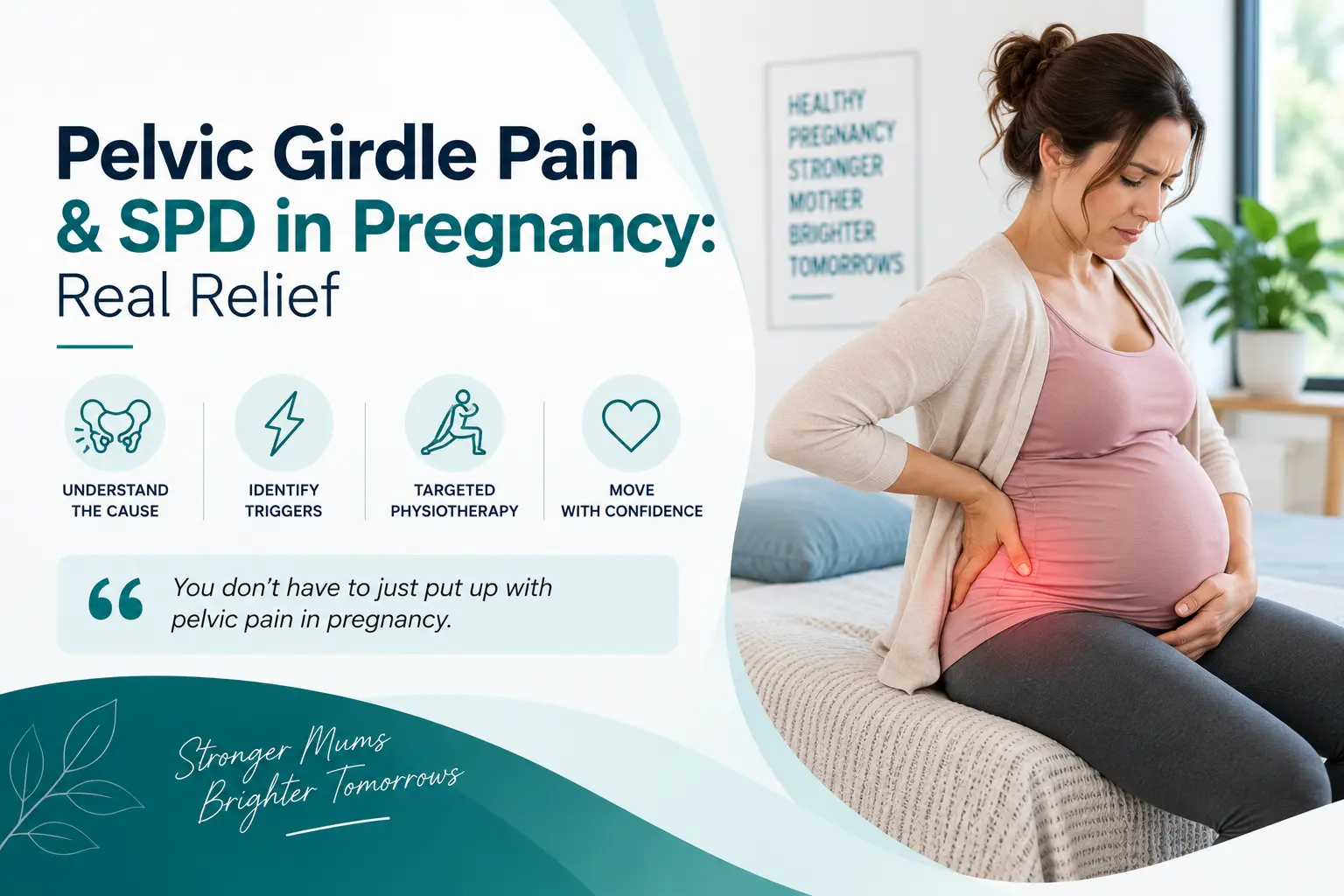
Pelvic girdle pain, and its front-of-pelvis form often called SPD, or symphysis pubis dysfunction, is pain in the joints of the pelvis during pregnancy. It can turn ordinary movements, rolling over in bed, climbing stairs, getting out of the car, into sharp, stabbing effort. This is not something you simply have to endure: about1 in 4 women with pelvic girdle pain report severe pain, and around 8% report severe disability from it (Physiopedia), yet it responds well to the right physiotherapy. This guide explains what it is, what flares it, and how to get real relief.
Pelvic girdle pain strains the pubic symphysis and the sacroiliac joints
Your pelvis is a ring of bone held together by three joints: the pubic symphysis at the front, and the two sacroiliac joints at the back, where the pelvis meets the base of the spine. Pelvic girdle pain is the umbrella term for pain in any of these. When the front joint is the main culprit, you may hear it called SPD; when it is the back joints, the pain sits either side of the tailbone. Knowing where it hurts matters, because it tells your physiotherapist which joint to settle and which muscles to train.
Relaxin loosens the pelvic joints and uneven load overworks them
Two things drive the pain, and neither is your fault. The hormone relaxin softens the pelvic ligaments so the ring can open for birth, which leaves the joints looser and less stable. Then load and movement fall unevenly across that looser ring, especially with a shifting centre of gravity, so the joints are asked to control more movement than they comfortably can. The wider mechanics of how pregnancy changes the body sit in our guide to pregnancy physiotherapy; here the focus is the pelvis, and what eases it.
Where it hurts, and how it feels
Pelvic girdle pain tends to show up as:
- pain over the pubic bone, the groin, the lower back or either buttock, sometimes spreading to the thighs;
- a grinding or clicking sensation in the pubic area;
- pain that spikes when you part your legs, stand on one leg, climb stairs or turn in bed;
- difficulty walking far, with a waddling gait as the pregnancy progresses.
Some movements flare pelvic girdle pain, and simple swaps ease it
A large part of relief is avoiding the movements that pull the pelvic ring unevenly, and the swaps are easy once you know them.
| Movement that tends to flare it | A kinder way to do it |
|---|---|
| Getting out of the car with legs apart | Keep your knees together and swivel out as one, feet together |
| Standing on one leg to dress | Sit down to put on underwear, trousers and shoes |
| Rolling over in bed with knees apart | Keep knees together, and place a pillow between them to sleep |
| Big strides, long walks or stairs two at a time | Take smaller steps, shorter outings, and one step at a time |
| Breaststroke, lunges and wide squats | Choose front-crawl, and swap wide-legged exercises for narrower ones |
| Carrying a load on one hip | Share the load evenly, or carry less more often |
Australian guidance on living with pelvic pain in pregnancy: Pregnancy, Birth and Baby. Your physiotherapist will tailor these to your triggers.
Physiotherapy relieves the pain with a support belt, targeted exercise and hands-on care
Physiotherapy is the mainstay of treatment, and it works on several fronts at once. Expect an assessment to pinpoint the joint at fault, then a plan that usually combines:
- A pelvic support belt that compresses and stabilises the pelvic ring, often easing pain the moment it goes on.
- Targeted exercise for the deep core, gluteal and pelvic floor muscles that control the pelvis, so the joints are supported by muscle rather than strained.
- Hands-on therapy to settle tight, overworked muscles and restore more even movement across the pelvis.
- Activity coaching on the swaps above, plus how to manage a flare so a bad day does not become a bad week.
Because the pelvic floor is part of the system that stabilises the pelvis, training it is often central to relief, which our guide to pelvic floor physiotherapy covers, and staying gently active with the right movements helps, as our safe exercise in pregnancy guide explains. Many women feel a real difference within the first week or two once the belt and the right exercises are in place, and the pelvis then stays supported through the rest of the pregnancy rather than being left to cope alone.
Pelvic girdle pain usually eases after birth, and physiotherapy shortens the wait
The most-asked question deserves a clear answer: for most women the pain settles after birth, as hormone levels return to normal and the load of the baby is gone. That said, around 1 in 10 women have ongoing pelvic girdle pain after birth (RCOG), and this is exactly the group physiotherapy helps most, because pain that lingers rarely resolves on its own. Starting treatment during pregnancy also lowers the odds of it dragging on, which is why waiting it out is usually the slowest route to relief.
| When pelvic pain needs urgent review Pelvic girdle pain is not dangerous to your baby, but some pelvic or abdominal pain is not pelvic girdle pain. Contact your midwife, GP or maternity unit promptly if you have regular tightening or cramping before 37 weeks, vaginal bleeding, a gush or leak of fluid, reduced baby movements, fever, or pain with burning when you pass urine. When in doubt, get checked. |
Befit Physio treats pregnancy pelvic pain in North Kellyville and Carlingford
You do not need a referral, and you do not need to wait until you can barely walk. At Befit Physio, our physiotherapists assess your pelvis, fit and adjust a support belt, and build an exercise plan around your triggers. That is what our pelvic health physiotherapy provides, from our North Kellyville clinic for the Hills and our Carlingford clinic for the surrounding suburbs, with home visits available when getting in is hard.
- Book an assessment at our North Kellyville clinic or our Carlingford clinic, in the clinic or at home.
| Sharp pain in the pubic bone, groin or lower back? Call North Kellyville on 02 9624 2047 or Carlingford on 02 9872 2005, or book online. We will settle the joint, ease the pain and keep you moving. |
Frequently asked questions
Does pelvic girdle pain go away after giving birth?
For most women, yes. It usually settles in the weeks after birth as hormone levels normalise and the baby’s weight is no longer loading the pelvis. A small group of women have pain that continues, and they benefit most from physiotherapy, since lingering pelvic girdle pain seldom clears up by itself. Treatment during pregnancy also reduces the chance of it persisting.
What makes pelvic girdle pain worse?
Movements that spread the pelvic joints unevenly are the usual culprits: parting your legs to get out of the car, standing on one leg to dress, rolling over with knees apart, big strides or stairs, breaststroke, wide squats and lunges, and carrying weight on one hip. Keeping your knees together, taking smaller steps and pacing activity all help, and a support belt often eases the load quickly.
Can I still exercise with pelvic girdle pain?
Usually yes, with the right choices. Gentle, symmetrical activity such as walking within comfort, stationary cycling and water exercise other than breaststroke tends to be fine, while wide-legged and single-leg movements are best modified. A physiotherapist will show you which exercises support the pelvis rather than strain it, so you stay active without flaring the pain.
Will pelvic girdle pain affect my labour and birth?
It usually does not prevent a normal birth. It helps to note your comfortable range of leg movement so your care team can support positions that keep your knees closer together during labour. A physiotherapist can suggest birth positions that protect the pelvis, which is one reason many women find an antenatal appointment worthwhile.
Is a pelvic support belt worth it, and should I just buy one online?
A belt often helps, because it compresses and stabilises the pelvic ring, but fit and position matter, and the wrong belt or placement can do little or even irritate. It works best as one part of a plan that also includes targeted exercise and activity advice, so it is worth having a physiotherapist fit it and check it is doing its job.
About the author and clinical review
| Author: Anshu Sudan, Principal Physiotherapist, Befit Physiotherapy & Sports Injury Centre. Clinically reviewed by: a physiotherapist at Befit Physio. Carlingford: Shop 2/1 Post Office St, Carlingford NSW 2118. North Kellyville: 15/21 Hezlett Rd, North Kellyville NSW 2155. |
| Medical disclaimer This article is general information, not personal medical advice, and reflects Australian and international guidance current as at July 2026. Every pregnancy differs. For a diagnosis and a plan suited to you, see a physiotherapist, midwife or doctor, and seek prompt care for the warning signs listed above. |