A hip replacement is one of the most reliable operations in medicine, so much so that it has been called the operation of the century. In Australia it is also one of the most common, tracked in near-complete detail by the national joint replacement registry. But the new joint does not come ready to use. The surgery removes the worn-out parts; the physiotherapy afterward is what restores the movement and strength that let you walk, climb stairs and get back to living. That is the part this guide is about.
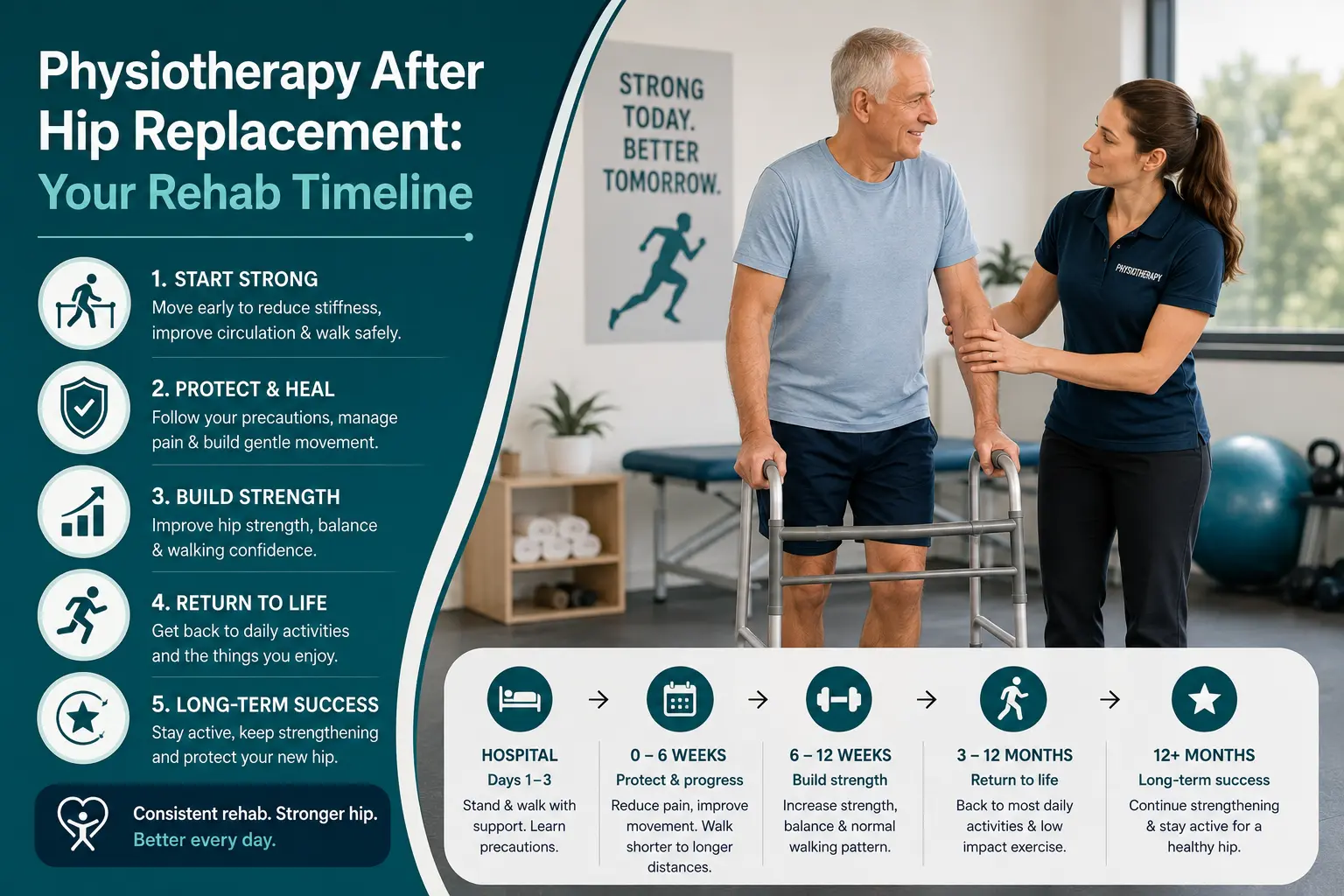
One idea shapes everything below: your rehabilitation is not the same as the person in the next bed. It depends on how your surgeon reached the joint, on your starting strength, and on your own effort, which is why the timeline here is a map to understand rather than a schedule to enforce.
| The operation of the century: total hip replacement. |
Start here: which approach did you have?
The single most useful thing to know before you rehabilitate a new hip is how the surgeon reached the joint, because it changes the rules for your first weeks. This is the biggest difference between hip and knee recovery, and it is worth asking your surgeon directly. The two common routes are the posterior approach, from behind the hip, and the anterior approach, from the front.
| Surgical approach | What it means for your early rehab |
|---|---|
| Posterior (from behind) | The most common route. Usually comes with a set of hip precautions for around six weeks to protect against dislocation while the tissues heal |
| Anterior (from the front) | Spares some muscle, so many people face fewer movement restrictions and often walk unaided and drive a little sooner |
The exact restrictions depend on your surgeon and your surgery. General guidance on hip precautions varies by approach; always follow your own written plan.
| Hip precautions: the positions to protect (posterior approach) If you had a posterior approach, you are usually asked to avoid three things for about six weeks, because together they can pop the new joint out before it is stable:
Anterior-approach patients often have fewer of these, but the rule that overrides everything is the same: follow the precautions your own surgeon gives you, for as long as they say. |
Your rehab timeline, stage by stage
Recovery moves through predictable stages. Knowing what each one is for makes the slow days less worrying, and helps you spot when you are ahead or behind and should check in.
The hospital: getting moving straight away
Most people stay in hospital for a few days and are helped to stand and take steps with a frame or crutches within a day of surgery. Early movement is not rushing; it lowers the risk of blood clots and stiffness, and modern implants are usually built to take your weight from the start. A physiotherapist teaches you to walk safely, manage stairs, and move in and out of bed without breaking your precautions.
- Milestone: walking short distances with an aid, and knowing how to protect the hip.
Weeks 0 to 6: protect, then progress
This is the precautions window for a posterior approach, and the phase where swelling settles and confidence returns. You gradually walk further, wean off the walking aids as your surgeon allows, and build gentle range and strength. Many people are back to light daily activities by around six weeks, and driving becomes possible once you can react safely and are off strong pain medication, which is often sooner after an anterior approach and around six weeks after a posterior one.
- Milestone: steadier walking, precautions lifting (posterior), and a return to easy day-to-day tasks.
Weeks 6 to 12: rebuild strength and normal walking
With the joint more secure, rehabilitation shifts toward strength, balance and a normal walking pattern. The focus moves to the muscles around the hip, especially the glutes and abductors that keep your pelvis level and stop a limp. By around three months, most people are back to the majority of their normal activities, including low-impact exercise like walking, swimming and cycling.
- Milestone: walking without aids or a limp, and returning to most everyday activities.
3 to 12 months: the long finish
Strength and confidence keep improving well beyond the early months. For some people it takes up to a year to feel the full benefit of the new hip. High-impact sports are usually discouraged to protect the joint, but an active, low-impact life is very much the goal.
- Milestone: full return to valued activities, with a hip you trust.
Everyday life: small changes that protect the new hip
The precautions are easiest to keep when your home is set up for them. A few practical adjustments cover most of daily life in the first weeks:
- Sit high. Use firm, higher chairs and a raised toilet seat so your hip stays above 90 degrees; avoid low, soft sofas.
- Dress with tools. A long-handled reacher, a sock aid and a long shoehorn let you dress without bending into the hip.
- Get into the car carefully. Slide the seat back, sit first, then swing both legs in together, keeping them from crossing.
- Sleep safely. Many people are advised to sleep on their back early on, with a pillow between the knees if they roll, until their team clears side-sleeping.
What the exercises are actually doing
Early exercises look simple, and that is the point. Ankle pumps keep the blood moving and lower clot risk. Gentle glute and thigh squeezes wake up muscles that switch off after surgery. Assisted movements restore range without stressing the repair. As you progress, the work becomes real strengthening, especially for the hip abductors and glutes, because those are the muscles that level your pelvis and give you a smooth, limp-free walk. This is the same principle that carries knee replacement recovery, where rebuilding strength, not resting, is what restores the joint; the weeks before surgery are training too.
| ⚠ When to seek urgent help Contact your surgical team or seek urgent care if you notice sudden severe hip or groin pain, the operated leg suddenly looking shorter or turned outward, or a loss of the ability to bear weight, as these can signal a dislocation. Also seek help for signs of a blood clot, such as calf pain, swelling, warmth or redness, or signs of infection, such as fever, or increasing wound redness or discharge. Early attention keeps a small problem small. |
Recover with support, close to home
A physiotherapist keeps your recovery on track, progressing your exercises safely and adjusting them to how the hip responds. For those who find it hard to travel early on, our home and aged care physiotherapy brings that rehabilitation to you, so the crucial early weeks are not spent waiting.
- Book an assessment with our Carlingford physio clinic or our North Kellyville clinic, in the clinic or at home.
- Bring your surgeon’s protocol. Knowing your approach and any precautions lets us tailor your program from day one.
| Planning your hip replacement recovery? Book online, or call Carlingford on 02 9872 2005 or North Kellyville on 02 9624 2047. We will build a rehab plan around your surgery and your goals. |
Frequently asked questions
How long do I need to follow hip precautions?
For a posterior approach, precautions usually last about six weeks, until the soft tissues around the joint have healed enough to keep it stable. Anterior-approach patients often have fewer restrictions. The exact length is set by your surgeon, so treat their timeline as the one that counts and confirm before you relax any restriction.
When can I drive again after a hip replacement?
It depends on your approach, which side was operated on, and whether you are off strong pain medication and can react safely in an emergency. Many people return to driving sooner after an anterior approach and around six weeks after a posterior one. Always get your surgeon’s clearance first, because returning too early is both a safety and an insurance risk.
When can I sleep on my side again?
Early on, many people are advised to sleep on their back, sometimes with a pillow between the knees if they tend to roll, to keep the hip in a safe position. When you can return to side-sleeping varies with your surgery, so ask your surgical team rather than assuming, and follow their advice.
How long until I walk normally without a limp?
A smooth, limp-free walk usually returns as the hip muscles, especially the glutes and abductors, regain strength, often over the first few months rather than the first few weeks. Consistent physiotherapy is what closes that gap, because a limp is more often a strength and control problem than a pain one.
How long does a hip replacement last?
For most people, a long time: hip replacement parts last at least fifteen years in about nine in ten people, according to Australia’s healthdirect, though a younger, more active person is more likely to need a revision eventually (healthdirect). Keeping to your exercises and a healthy weight helps your new hip last.
Source for hip replacement longevity and recovery: healthdirect, Hip replacement.
About the author and clinical review
| Author: Anshu Sudan, Principal Physiotherapist, Befit Physiotherapy & Sports Injury Centre. Clinically reviewed by: a Befit physiotherapist. Carlingford: Shop 2/1 Post Office St, Carlingford NSW 2118. North Kellyville: 15/21 Hezlett Rd, North Kellyville NSW 2155. |
| Medical disclaimer This article is general information, not personal medical advice, and reflects the evidence as at July 2026. Recovery after hip replacement depends on your surgery, your surgeon’s protocol and your individual health. Always follow your surgical team’s precautions and advice, and seek assessment if you have any of the warning signs above. |