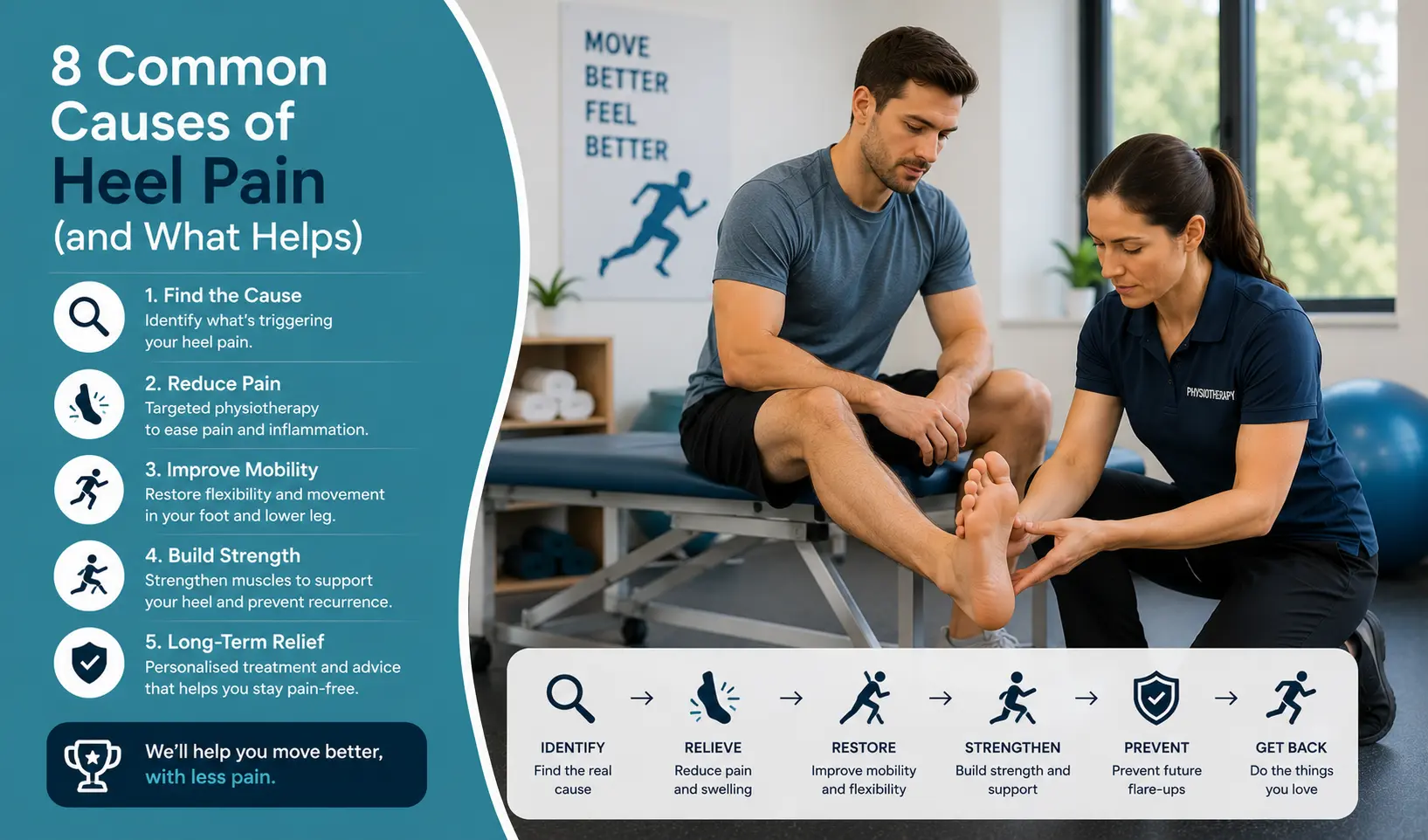
Heel pain is common and usually very treatable, but it is not always plantar fasciitis, even though that is the label it often gets. The heel takes your full body weight with every step, and several different structures, the plantar fascia, the Achilles tendon, the fat pad, the growth plate in children, and even a nerve, can be the real culprit. Getting the cause right matters, because the fix for one is not the fix for another (AAFP heel pain review).
The good news is that the great majority of heel pain settles with the right load management and physiotherapy, without injections or surgery.
The quickest way to narrow things down is to notice where on the heel it hurts and when. Use the table below to orient yourself, then read the short rundown of all eight causes underneath.
Where and when it hurts: a quick heel-pain differentiator
Find the row that matches your pain. A downloadable copy is attached to this article. It points you to the likely cause; a physiotherapist confirms it with a hands-on assessment.
| Where and when it hurts | Most likely cause | What tends to help |
|---|---|---|
| Under the heel, worst on the first steps in the morning | Plantar fasciitis | Calf and foot stretching and strengthening, supportive shoes |
| Back of the heel at the tendon, with running or stairs | Achilles tendinopathy | Progressive calf loading and load management |
| Back of the heel, swollen where the shoe rubs | Retrocalcaneal bursitis | Reducing pressure and irritation, footwear change |
| Deep in the centre of the heel, like a bruise | Heel fat pad syndrome | Cushioning, heel cups, activity modification |
| Under the heel in an active child or teenager | Sever’s disease | Load management and calf stretching |
| Worsens steadily with impact or more training | Calcaneal stress fracture | Rest from impact and prompt assessment |
| Burning, tingling or numbness around the heel | Nerve entrapment (tarsal tunnel) | Assessment to settle the nerve and address load |
| Heel pain with a spur seen on an X-ray | Heel spur, often linked to plantar fasciitis | Treat the soft tissue, not the spur |
Befit Physio Heel-Pain Differentiator v1.0 · 11 July 2026. A guide to narrow the cause; confirm it with an assessment. Sources: AAFP; Cleveland Clinic.
The 8 common causes, explained
1. Plantar fasciitis
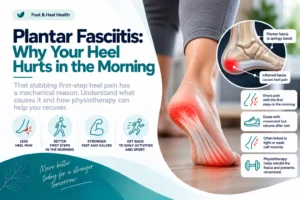
The most common cause of heel pain in adults. The plantar fascia is a thick band along the sole, and when it is overloaded it causes pain under the heel that is at its worst with the first few steps in the morning or after sitting (healthdirect). It usually responds well to calf and foot loading and supportive footwear.
2. Achilles tendinopathy
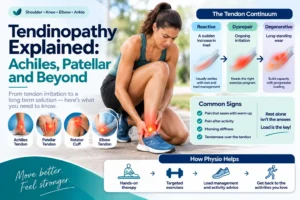
Pain at the back of the heel where the Achilles tendon attaches, brought on by overuse of the calf through running, jumping or a jump in training load. Rest alone tends to disappoint; the tendon responds to progressive loading.
3. Heel spur
A small bony growth on the heel bone, often found on an X-ray alongside plantar fasciitis. Here is the twist: the spur itself is usually not the pain source, and plenty of people have spurs with no symptoms at all. Treatment targets the irritated soft tissue, not the spur.
4. Heel fat pad syndrome
The heel sits on a natural cushion of fat that absorbs shock. If that pad is bruised or thins with age, you feel a deep, central ache like a bruise right under the heel. Cushioning, heel cups and easing impact help, and symptoms can take time to settle (research review).
5. Retrocalcaneal bursitis
A small fluid-filled sac at the back of the heel can become irritated, often where a firm shoe heel rubs. It causes swelling and tenderness at the back of the heel, and settles by reducing the pressure and irritation.
6. Sever’s disease
The most common cause of heel pain in active children and teenagers, from repetitive load on the growth plate of the heel bone. It sounds alarming but is not a disease in the usual sense; it is temporary, settles as the growth plate matures, and is managed with load management and calf stretching.
7. Calcaneal stress fracture
A stress fracture of the heel bone builds up from repeated impact, common with a spike in running or a change to a harder surface. The tell-tale sign is heel pain that steadily worsens with activity rather than easing as you warm up. This one needs prompt assessment and a break from impact.
8. Nerve entrapment
Less common, but worth knowing: a nerve near the heel can be compressed (tarsal tunnel syndrome is one example), producing burning, tingling or numbness rather than a simple ache. Because it behaves differently, it needs a different approach, which is why an accurate diagnosis matters.
What helps most heel pain
Despite the range of causes, the foundations of recovery are similar for most of them: manage the load that is irritating the heel, build strength and capacity in the calf and foot, and get the footwear and support right for your feet and activity. Injections and surgery are rarely needed and are not the starting point.
A physiotherapist works out which structure is involved and builds a plan around it, which is what our heel pain treatment is designed to do. If your pain sits more toward the ankle than the heel, our guide to ankle sprain symptoms and rehab may fit better.
| When to get it checked promptly See a health professional soon if you cannot put weight on the heel, the pain follows a specific injury and is severe, the heel is hot, red and swollen (which can suggest infection), you have numbness or tingling, or the pain steadily worsens with activity in a way that suggests a stress fracture. Most heel pain is not serious, but these features deserve a prompt assessment. |
Get to the bottom of your heel pain at Befit
- Book an assessment with our Carlingford physiotherapists or our North Kellyville team, online or by phone.
- Bring the details. When it hurts, where it hurts, your footwear and any recent change in activity all help us pinpoint the cause.
| Sore heel that will not settle? Book a one-on-one assessment online, or call Carlingford on 02 9872 2005 or North Kellyville on 02 9624 2047. We will identify the cause and get you on the right plan. |
Frequently asked questions
Is heel pain always plantar fasciitis?
No. Plantar fasciitis is the most common cause of heel pain in adults, but it is far from the only one. Achilles tendinopathy, heel fat pad syndrome, bursitis, Sever’s disease in children, stress fractures and nerve problems can all cause heel pain, and each is managed differently, so an accurate diagnosis matters.
Why does my heel hurt most in the morning?
Sharp pain under the heel with the first few steps in the morning, or after sitting, is the classic pattern of plantar fasciitis. The tissue tightens during rest and is loaded suddenly when you stand. It often eases as you move, then returns after rest. Gentle stretching and loading usually help.
Should I rest or keep moving with heel pain?
It depends on the cause, but complete rest is rarely the answer. Most heel pain improves with managing the load rather than stopping altogether, along with targeted strengthening. A suspected stress fracture is the main exception, where a break from impact is needed, so it is worth getting the diagnosis right first.
Do I need a scan for heel pain?
Usually not. Most heel pain is diagnosed from your history and an examination. Findings like heel spurs on X-ray are common and often unrelated to the pain. Imaging is reserved for when a clinician suspects something specific, such as a stress fracture, that would change your treatment.
About the author and clinical review
| Author: Anshu Sudan, Principal Physiotherapist, Befit Physiotherapy & Sports Injury Centre. Clinically reviewed by: a Befit physiotherapist. Carlingford: Shop 2/1 Post Office St, Carlingford NSW 2118. North Kellyville: 15/21 Hezlett Rd, North Kellyville NSW 2155. |
| Medical disclaimer This article is general information, not personal medical advice, and reflects the position as at July 2026. Heel pain has several causes that are managed differently, so use this as a guide and get an individual assessment for a diagnosis. If you have any of the warning signs above, seek prompt care. |