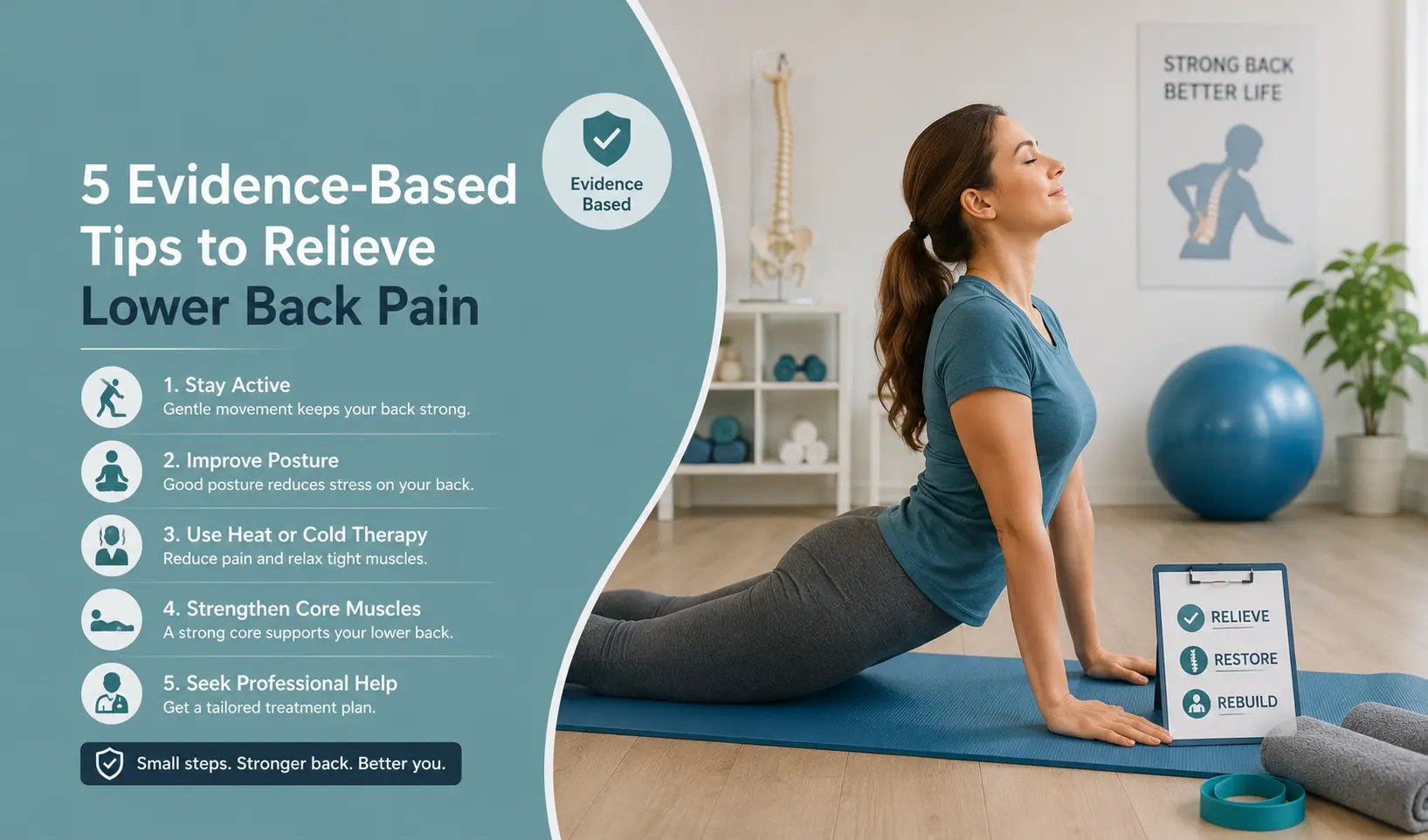
Most lower back pain is not serious and settles within a few weeks, and the single most helpful thing you can do is keep moving. Australia’s Low Back Pain Clinical Care Standard is clear that staying active leads to the most rapid and complete recovery, while long periods of bed rest slow it down. The five evidence-based tips below help you ease the pain, protect your back, and know when to get help.
These apply to non-specific lower back pain, the everyday kind that many people call a sore back, a pulled back or a slipped disc, and which usually has no serious cause. If your pain follows a major injury or comes with the warning signs listed further down, treat those as the priority instead.
Most lower back pain eases within a few weeks. The best self-care is to keep moving, add gentle walking and exercise, use heat for muscle spasm, vary how you sit, lift and sleep, and look after sleep and stress. See a physiotherapist if it lingers past about six weeks, and seek urgent care for red-flag symptoms.
Non-specific lower back pain is back pain without a serious underlying cause, which covers the large majority of cases. It is real and often very painful, but it is usually not a sign of damage, and it tends to settle as you return to normal movement.
This article focuses on what you can do to feel better now.
Tip 1: Keep moving, because gentle activity beats bed rest
The old advice to rest a sore back has been overturned. Current guidelines, including RACGP advice to stay active, show that continuing your normal activities as much as the pain allows leads to faster recovery, while resting in bed for more than a day or two tends to make stiffness and pain worse. Movement keeps the muscles and joints working, calms the nervous system’s alarm, and reminds your back that it is safe to move. Aim to keep doing daily tasks, get up and change position regularly, and treat gentle movement as part of the treatment, not something to avoid.
Tip 2: Ease back in with walking and simple exercise
Once you are moving, add a little structured activity. Healthdirect suggests walking, water-based walking, swimming and gentle floor stretches as good ways to start. The goal is not to push through sharp pain but to build up gradually: a short walk today, a slightly longer one tomorrow. Regular, low-load movement improves blood flow, maintains strength, and builds the confidence that often fades when a back is sore. If a particular movement flares the pain, ease off it for a day or two, then try again with a smaller range.
Tip 3: Use heat to settle muscle spasm
For the tight, guarded feeling that comes with a flare-up, heat is a simple and effective option. A heat pack or warm shower can reduce pain caused by muscle spasm, as healthdirect notes, by relaxing the muscles and easing that protective tension. Use heat for short periods, protect your skin from burns, and pair it with the gentle movement from the first two tips rather than using it to stay still. Some people prefer cold in the first day or so; both are reasonable, so use whichever gives you more relief.
Tip 4: Take the load off how you sit, lift and sleep
How you hold your body through the day matters less as a matter of perfect posture and more as a matter of variety and load. No single position is ideal for hours, so the aim is to move often: shift in your chair, stand and walk regularly, and avoid staying folded over a desk or phone for long stretches. When you lift, keep the load close, bend at the hips and knees, and avoid twisting under weight. For sleep, many people are more comfortable on their side with a pillow between the knees, or on their back with a pillow under the knees. Small changes that spread the load make a real difference to a sore back.
Tip 5: Look after sleep, stress and pacing
Pain is not only physical. Poor sleep, stress and worry all turn up the volume on back pain, which is why the clinical care standard treats these as part of first-line care, not an afterthought. Protect your sleep, use relaxation or breathing to settle a stressed nervous system, and pace your activity so you stay consistent rather than swinging between overdoing it and resting completely. Understanding that hurt does not always mean harm takes the fear out of movement, and that alone often reduces pain.
Your first two weeks, mapped out
Knowing what is normal at each stage takes a lot of the worry out of a sore back. This roadmap, built from the Low Back Pain Clinical Care Standard and healthdirect, shows what to expect and what to do as you recover.
| Stage | What is usually happening | What to do | What to ease off |
| Days 0 to 2 | Pain and muscle guarding peak; usually protective, not damage | Move gently, change position often, use heat, simple pain relief if needed | Bed rest beyond a day or two, heavy lifting, pushing into sharp pain |
| Days 2 to 14 | Pain usually starts to ease as you move more | Add short walks and gentle stretches, build up a little each day | Long periods sitting or lying still; a scan is not needed without red flags |
| Weeks 2 to 6 | Most non-specific low back pain improves within about six weeks | Return to normal activity and work, keep exercising, strengthen gradually | Fear of movement, and waiting it out passively |
| Beyond 6 weeks | A smaller number have pain that lingers | Get a physiotherapy assessment and a progressive program | Relying on rest, repeated scans or strong painkillers alone |
Befit Lower Back Pain First-Two-Weeks Roadmap v1.0 · 11 July 2026. Based on the Low Back Pain Clinical Care Standard and healthdirect. General guidance, not a substitute for individual advice.
When back pain needs urgent care
Fewer than one in a hundred people with low back pain have a serious cause, but some symptoms need prompt medical attention. Seek urgent care if you have loss of bladder or bowel control, numbness around the groin or inner thighs, worsening weakness in a leg, severe pain after a serious fall or accident, unexplained weight loss, or fever with back pain. When in doubt, get checked.
When to see a physiotherapist, and how we help
If your pain is not settling by around six weeks, keeps returning, or is stopping you sleeping or working, that is the point to get assessed. A physiotherapist can pinpoint what is driving the pain, rule out anything that needs a doctor, and build you a program that targets the cause. Guidelines also advise against routine scans and strong painkillers for ordinary low back pain, favouring active treatment instead (APA). You can read how our physiotherapy for back and neck pain works if you want to know what treatment involves.
If your pain has been there for months rather than weeks, it is worth reading why physiotherapy is a safe first-line treatment for chronic back pain, because persistent pain responds to a slightly different, longer-term approach.
Book an assessment at Befit
Start the tips today. Keep moving, add a short walk, and use heat for relief.
Book an assessment with our Carlingford physios or the North Kellyville clinic if the pain is not easing or you are unsure.
Want a plan tailored to your back? Book a one-on-one assessment online, or call Carlingford on 02 9872 2005 or North Kellyville on 02 9624 2047. We will check for anything serious and set you up with the right exercises for your stage of recovery.
Frequently asked questions
How long does lower back pain take to go away?
Most non-specific lower back pain improves within about six weeks, and often much sooner. Staying active speeds recovery, while bed rest slows it. If your pain is not improving by around six weeks, is getting worse, or keeps coming back, see a physiotherapist or GP for an assessment.
Should I rest or stay active with lower back pain?
Stay active. Current Australian guidelines advise keeping up your normal activities as much as the pain allows and avoiding more than a day or two of bed rest. Gentle movement, walking and light exercise help your back recover faster than resting does.
Is heat or ice better for lower back pain?
Both can help, so use whichever gives you more relief. Heat is especially useful for the muscle spasm and tightness of a flare-up, while some people prefer cold in the first day or so. Use either for short periods and protect your skin.
Do I need a scan or X-ray for my back pain?
Usually not. Guidelines recommend against routine imaging for ordinary low back pain when there are no red-flag symptoms, because scans rarely change treatment and often show harmless changes. A scan is only needed if your clinician suspects a serious cause.
When should I worry about lower back pain?
Seek urgent care for loss of bladder or bowel control, numbness around the groin, worsening leg weakness, severe pain after a serious accident, unexplained weight loss, or fever with back pain. These red flags are rare, but they need prompt medical attention rather than self-care.
About the author and clinical review
| Author: Anshu Sudan, Principal Physiotherapist, Befit Physiotherapy & Sports Injury Centre. Clinically reviewed by: a Befit physiotherapist. Carlingford: Shop 2/1 Post Office St, Carlingford NSW 2118. North Kellyville: 15/21 Hezlett Rd, North Kellyville NSW 2155. |
| Medical disclaimer This article is general information, not personal medical advice, and reflects Australian guidance as at July 2026. Lower back pain varies from person to person, and the right approach depends on your circumstances. If you have severe or rapidly worsening symptoms, or any of the red flags above, seek urgent medical care. |