Neck and spine pain are commoner than you may think. These affect many people and can limit daily activities and quality of life in a major way. Medication can offer relief, but only temporarily. Often, it fails to address the underlying causes of pain. You can try effective alternatives in the form of physiotherapy techniques.
These include manual therapies and exercises, which restoring function, reducing pain, and preventing recurrence. The mechanics of your neck and spine can improve naturally and safely. Such therapies try to cure pain right from its source. These can promote healing, and support long-term spinal health, not just suppress your symptoms.
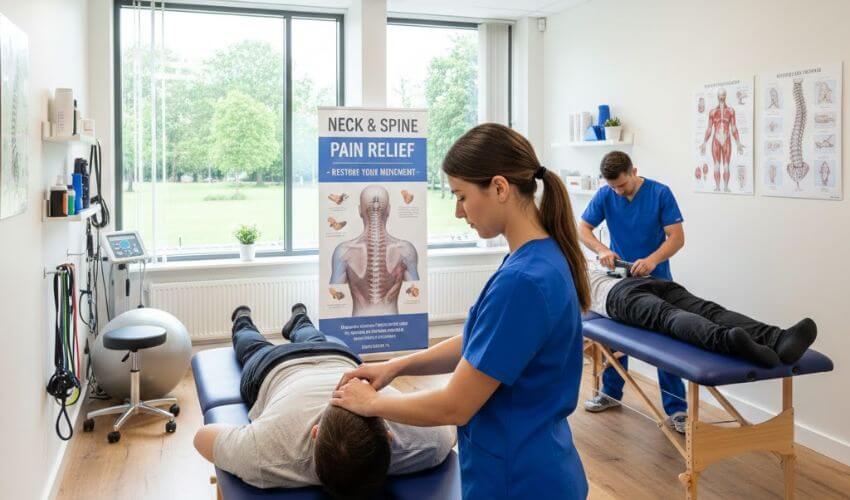
Common Causes of Neck and Spine Pain
There can be various causes of neck and spine pain. Poor posture puts unhealthy pressure on the spine. This especially arises from prolonged sitting or excessive use of digital devices. Muscle strains often contribute to discomfort as well, when there are repetitive movements, heavy lifting, or sudden injuries.
You can also experience chronic irritation and pain due to degenerative changes such as cervical spondylosis or herniated discs, which can affect your spinal nerves and discs.
Poor work ergonomics that involve prolonged inactivity or do not support proper alignment can also lead to stiffness and pain. Falls, whiplash or other trauma can also misalign joints and strain muscles, resulting in long-term discomfort. You have to target the specific dysfunction, which is possible through effective physiotherapy treatment that identifies the particular cause of pain.
Joint Mobilization vs Manipulation
Joint mobilization is a gentle, controlled manual therapy. With slow, repetitive movements on stiff joints, physiotherapists can improve their natural range of motion. They focus on increasing joint glide and flexibility gradually. No sudden force is applied. This makes it apt for remedying mild stiffness or arthritic conditions.
In Joint manipulation, on the other hand, more forceful thrust is applied to a restricted joint. This often leads to an audible “pop” or release. It can realign joints and restore mobility instantly. The method is generally used for acute joint restrictions or mechanical dysfunction.
Mobilization offers a gentler, more sustained approach. In contrast, manipulation can ensure faster relief of joint locking. Based on the patient’s condition, pain tolerance, and treatment goals, physiotherapists choose and combine these techniques.
Role of Posture Correction and Muscle Strengthening
Long-term neck and spine pain relief depends a lot on postural correction and strengthening supporting muscles. After evaluating your body alignment and ergonomic factors, your physiotherapist can guide you in adopting proper posture during daily activities.
It is critical to strengthen key muscles, such as deep neck flexors, shoulder stabilizers, and back extensors. Weak muscles cannot support spinal structures enough. This can increase your joint stress and discomfort. You can improve muscle balance and spinal stability with exercises like chin tucks, scapular retractions, pelvic tilts, and stretches.
When to Seek a Physiotherapist?
It is recommended that you consult a physiotherapist if:
- Your neck or spine pain persists for more than two weeks despite rest, or
- If it is accompanied by symptoms
There can be various symptoms, such as:
- Numbness,
- Tingling in the arms or legs,
- Restricted movement, or
- Headaches linked to neck tension
You should also seek professional assessment in case you experience pain after an injury or fall. Physiotherapists perform detailed evaluations, including movement analysis. They may also recommend imaging, to diagnose the underlying issue accurately.
Long-Term Prevention Tips
If you want to maintain a healthy neck and spine, you need more than just treatment; you require continuous preventive care. Following these tips can also come in handy for you:
Maintaining proper posture
Try to keep screens at eye level. Avoid prolonged forward head positions, so that you can reduce undue strain.
Taking regular movement breaks
Such breaks can be very useful during long periods of sitting. You have to stand, stretch, or walk, which can alleviate your stiffness and muscle fatigue.
Doing regular exercises
Going for workouts such as yoga, swimming, or Pilates helps strengthen spinal muscles. You can maintain flexibility more easily.
Using supportive ergonomic furniture
Try to use furniture that supports your ergonomics. Sleep on a firm mattress with suitable pillows, which can support your spinal alignment.
Managing stress
You can do this through mindfulness or relaxation techniques, to prevent muscle tightness around the neck and shoulders.
With appropriate physiotherapy techniques that go beyond medication, you can ensure effective neck and spine pain relief. You can improve your quality of life without reliance on drugs or invasive procedures.